

Teeth-Whitening Options
Last updated July 2026
A bright, white smile has become a popular cosmetic improvement. The dental industry has responded with a vast array of options, from in-office laser treatments to over-the-counter strips and trays. But with so many products making bold promises, knowing which approach is safe, effective, and right for you requires chomping through a lot of information.
Be aware that most dental restoration work—caps, crowns, and fillings and veneers made with resin composites—can’t be brightened up by any of these methods; only natural teeth can be bleached. If you have visible dental work, the only way to get a uniformly white grin may be to redo the restoration work or have whiter veneers applied.
Here’s a rundown of the three major whitening approaches.

In-Office Dental Treatments
All whitening methods require a bleaching agent, usually hydrogen peroxide or carbamide peroxide (which releases hydrogen peroxide). The main differences in treatments and products are costs and time. Because dentists can apply agents with high concentrations of hydrogen peroxide while protecting gums from damage, they can offer same-day efficacy.
A clinical study cited by the American Dental Association (ADA) found that, to achieve the level of whitening received during a single in-office procedure, a dentist-prescribed at-home treatment program took seven days and an OTC bleaching product took 16 days. The tradeoff? In-office treatment costs more than at-home options.
During an in-office whitening or “power bleaching” session, the dentist first cleans teeth to remove plaque and tartar. Then they shield gums and apply a highly concentrated whitening liquid and cure it (speeding its action) with ultraviolet light for up to 15 minutes. This process is then repeated three to four times during the same visit. If you have sensitive teeth, tell your dentist; they may modify your whitening schedule or recommend an over-the-counter pain medicine before treatment.
Dentists also may apply a whitening agent to your teeth and seal it into place with a varnish; after 30 minutes, they brush off excess material.
In-office treatments typically cost from $500 to more than $1,000, depending on the dental practice and the procedure.
If you already have a tooth doc you like, you’ll probably want to stick with them for whitening. Keep in mind that when our undercover shoppers collected costs for common procedures from dental practices they were quoted huge price differences for the same care, with some practices charging more than twice what others do. We also find that many top-rated dentists offer low prices.
Take-Home Kits from Your Dentist
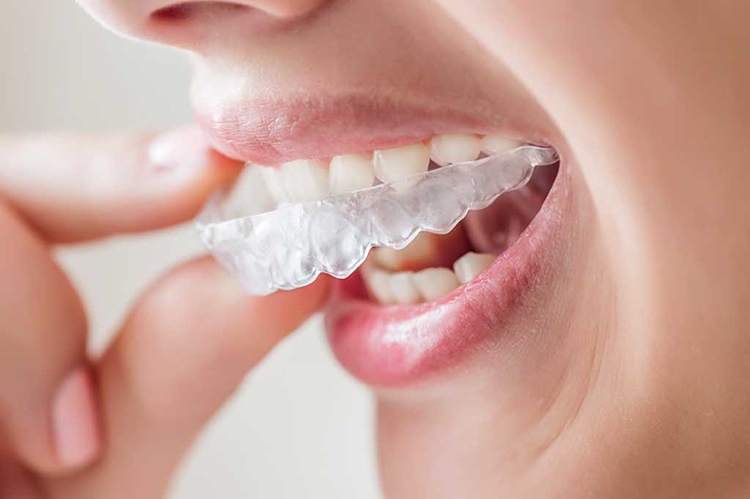
As an alternative to in-office whitening, many dentists supply patients with whitening gels and trays for treating their choppers at home.
With most of these at-home regimens, the dentist makes a mold of your teeth or uses a 3-D scanning tool to create a digital model. Either can be used to fabricate a custom tray (or trays, if you’re whitening top and bottom). At home, you fill the trays with a small amount of whitening gel and wear them periodically for a few days or weeks, depending on the strength of the whitening agent and desired hue. The trays help maximize tooth coverage and minimize the amount of whitening agent that touches your gums, which helps avoid irritation. The precise fit of custom trays also keeps saliva from mixing with and weakening the whitening agent.
At-home treatments usually use solutions with carbamide peroxide concentrations ranging from 10 to 38 percent, with higher concentration levels enabling shorter treatment periods. The ADA reports that daily treatment times for whitening typically range from two to 10 hours for periods of six to 28 days.
Your dentist should prescribe a gel with a lower concentration if you fear pain from tooth sensitivity or gum irritation. Dr. Sara Cohen, a dentist practicing in Washington, D.C., told us that after years of prescribing at-home whitening treatments, she prefers a lower 10 percent-concentration gel worn for longer periods of time over high-concentration ones used for fewer days. She also recommends patients wear trays overnight. While the product remains active for only a few hours, she said there’s no harm in wearing the trays beyond that while you sleep.
To conserve product and reduce pain from teeth sensitivity, you can opt to apply gel only to the front of the trays.
Once your teeth have reached your desired shade, you can discontinue treatment. But hang on to the trays and any leftover gel for future touchups.
Most dentists charge from $400 to $600 for take-home whitening with custom trays.
Over-the-Counter DIY Products
Strips, gels, pens, pricey toothpastes, kits with fancy lights, celebrity endorsements. There are an overwhelming number of at-home whitening products to sink your teeth into. But once you peel away the marketing hype, all this stuff is similar: Like the products dentists can apply or prescribe, almost all effective over-the-counter agents contain hydrogen peroxide or carbamide peroxide. The differences? Concentration levels and application methods.
The bestseller among OTC options is Crest 3D Whitestrips, which are available in a variety of types. This product—and competing brands of strips—offer a mess-free alternative to also-popular gels. The ADA suggests using strips that contain no more than 10 percent hydrogen peroxide or 35 percent carbamide peroxide.
The big difference between using whitening strips versus custom trays provided by dentists? The trays hug each tooth, allowing the whitening agent to reach its entire surface, whereas strips offer only a one-size-fits-all design that may not contact all the surfaces you wish to whiten, especially in spots between teeth.
But many dentists, including Dr. Cohen, say strips can work and are worth a shot. Their low cost, compared to in-office dentist treatments, is especially attractive: Kits that include a two-week course of treatment usually cost just $25 to $60, depending on brand and features.
Also consider various gels, pens, and other at-home methods. Many consumers like ones with flexible-tipped applicators to spread whitening gel directly onto teeth, allowing them to reach spots strips won’t contact, like little gaps between teeth. Colgate offers such a whitening pen (at drugstores for about $20) that promises to whiten teeth in just a week using a hydrogen peroxide gel that you wear overnight, no trays needed; the bleaching varnish dries immediately.
The ADA Seal of Acceptance on whitening products signals they have been found safe and effective in independent tests. Take care when using any of these at-home products, as the peroxide can cause temporary gum irritation, especially if the treatment procedure allows the solution to contact gums.
How Long Will the White Last?
Most smiles will remain bright for one to three years, but you likely will see a partial loss of whiteness within a few months—especially if you continue consuming the same foods and drinks or using tobacco products that caused the initial discoloration.
You can re-treat—either with the help of a dentist or on your own. If you opt for a dentist-fitted tray-based system, hang on to the trays; that way, you can simply get more gel from your dentist. The nice thing about follow-up self-treatment is that you can do a “touchup” on occasion—possibly by wearing a tray or strips for a couple of hours every few months.