

Ceramic Coatings for Your Car: Don’t Get Oversold on This Pricey Treatment
Last updated November 2026
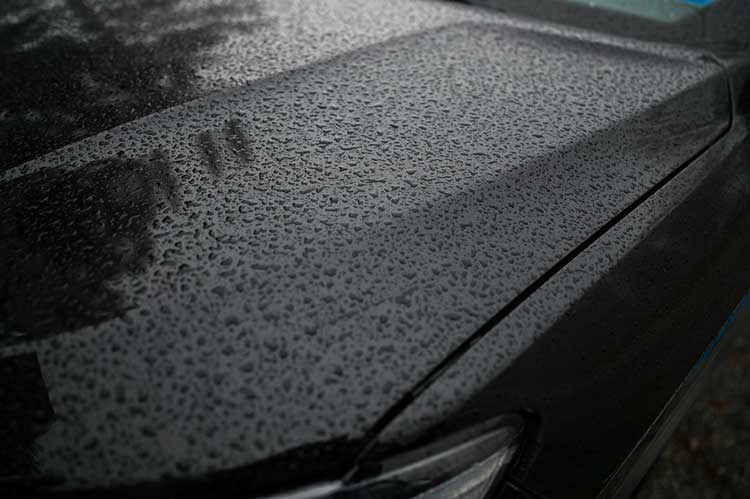
Car dealerships love to pitch highly profitable add-ons (gap insurance, extended warranties, trunk organization systems, protective coatings), often after first wearing down customers in hours-long price negotiations. Today, these pitches also include ceramic coating, which is often bundled with a fabric-protection warranty. The cost is usually $800 to $2,500. Some detailers and car-care centers also push ceramic coating.
The pitch? The process will make washing your ride effortless, and provide a nearly indestructible, permanent shield for your car’s paint, keeping it looking brand new for many years.
On one hand, ceramic coating for vehicles is a legitimate product. The work involves applying a liquid polymer that bonds to a car’s paint. If done correctly, it creates a hard, water-repellent layer that lasts far longer than wax, which breaks down within a few months.
Unfortunately, most of what gets claimed about ceramic coatings doesn’t hold up to scrutiny. For example, ads and salespeople claim this “miracle” protection makes your paint scratchproof. They often cite hardness ratings like “9H” or “10H.” But those numbers relate to lab testing of how hard pencil lead needs to be to scratch the coating’s surface. Hardness tests say little about how a coated car holds up to rock chips, key scratches, or ordinary road debris.
Even more confusing: There’s no industry standard as to what exactly ceramic coating potions are made of. Most contain silicon dioxide, or SiO2; the higher the percentage supposedly signaling a stronger, longer-lasting product. But we couldn’t find consensus among companies on what those numbers even mean, with various experts claiming the SiO2 percentage needed runs from 10 to 85 percent. And some others say it’s not even the most important ingredient in ceramic coating.
We found little independent testing indicating that ceramic coating makes vehicles’ surfaces more durable. The companies selling it often cite studies for UV exposure, chemical resistance, salt-spray corrosion, etc., but those tests were conducted and published by the companies selling the coatings.
Worse, often what’s sold by car dealerships as “ceramic” coating isn’t even that. Some simply spray on the same generic sealants they’ve always used, now calling the stuff “ceramic”—and then charge hundreds or even thousands of dollars for the job.
If the companies that manufacture the coatings and apply them really believed in the service, they’d offer strong warranties and guarantees. They do not. For example, Ceramic Pro, the self-described “global leader in nanoceramic surface protection technology” and “pioneers of this industry-defining innovation,” excludes from its warranty protection “damage caused by manual or automatic [car] wash brushes, abrasive cloths, sponges or materials.” In other words, getting your car washed could damage the $800 to $2,000 nano-something coating.
Ceramic Pro’s warranty also provides few guarantees. It offers different warranty tiers; its “Gold” package, a “lifetime warranty,” requires you to get an annual inspection. If you don’t do that, the warranty coverage drops to just five years from the date of the last inspection. And claims are capped at $2,000, or the cost of the original coating job, whichever is less.
If you’re a car lover and wash and wax your ride religiously, then ceramic coating will save you some effort, since it’s essentially a super-charged wax job. But before paying for it, make sure the shop is diligent. A legitimate ceramic application takes many hours to do correctly. Before applying the ceramic coating, all surfaces of the car must be cleaned thoroughly. If the car isn’t brand-new, paint-correction work—buffing out existing swirls and scratches—will probably be needed, since anything left in the paint will get sealed in by the ceramic coating. After application, a real ceramic coating needs at least 24 hours to cure before the car can get wet. So—red flag!—any dealership or company that says it can apply a ceramic coating and hand you the keys the same day is either not applying true ceramic or is skipping important steps.
Overall, we don’t think the benefits of ceramic coatings justify the price difference or the hassle vs. regular basic wash-and-wax jobs, which deliver most of the same practical benefits for less money.
