

Last updated July 2026

The fitness industry runs on broken resolutions. Even by the industry’s own accounting, about one in three gym members quit each year, according to the Health & Fitness Association’s most recent “Benchmarking Report.” And many other consumers sign up for exercise classes or buy home equipment and stop using them.
Sometimes life gets in the way. More often, consumers pick workout strategies that didn’t fit their schedules, abilities, or goals. A smart fitness plan accounts for where you’re starting, what you’re working toward, and how to keep going when motivation fades. Here’s how to build one:
Assess your fitness level.
Get a physical before starting a new exercise regime, especially if you’re over 40 or haven’t exercised regularly for some time (or ever).
You can do your own assessments: Measure your pulse, blood pressure, weight, how long it takes to walk or jog a mile, how many pushups you can do, etc. If you have weakness in a particular area or an injury (including an old one), consider scheduling a few sessions with a physical therapist or personal trainer to prep your body for more strenuous activity and to learn about ways to avoid harm (for example, building core strength to protect your back).
Set goals and develop a plan for success.
Do you want to lose weight, improve aerobic fitness, improve your mental health (yes, exercise can do that), or build muscle? These decisions might drive what you do and how often you do it.
Doing any physical activity benefits your health. A key is finding an exercise that you’ll enjoy, not dread. If you find something your friends also like to do—pickleball, parkour, etc.—all the better.
Think about physical activities you’ve had fun doing. Love to cut a rug at weddings? Try a dance fitness option like Zumba. Were you once an aspiring ballerina? The graceful (yet challenging) moves incorporated into barre classes could be your thing. Former swim team star? There are scads of inexpensive (or free) pools that have dedicated lap lanes.
The American Heart Association recommends adults:
- Get at least 150 minutes per week of moderate-intensity aerobic activity or 75 minutes per week of vigorous aerobic activity, or a combination of both, preferably spread throughout the week.
- Add moderate- to high-intensity muscle-strengthening activity (such as resistance or weights) on at least two days per week.
- Gain even more benefits by being active at least five hours per week.
- Increase amount and intensity gradually over time.

Make a long-term commitment.
Don’t solely rely on a short-term goal (e.g., high-school reunion, lower cholesterol levels before a checkup, upcoming vacation). Goals can help motivate you through a couple of tough weeks, but you’re better off setting longer-reaching objectives. So be realistic about what you’re likely to stick with for weeks, months, and years.
“Be true to yourself. If you are not a morning person, don’t commit to working out at 6 a.m.,” said Laura Moore, a certified personal trainer and owner of the Prince George’s Strength Club in Brentwood, Md. “Think about what’s convenient to your daily routine. View fitness as a genuine commitment. Add your workouts to your calendar and treat them like you would an important appointment.”
Before you schedule a single workout, answer these questions honestly:
- What days are genuinely flexible for me?
- How long can I realistically exercise without it creating stress elsewhere?
- Do I have more energy in the morning or evening?
- What equipment do I have access to?
A 30-minute workout you do consistently will always beat a 90-minute one you abandon a week later. Build the plan for your real life, and you can always expand it later.
If you are unlikely to stick with an exercise plan on your own, consider hiring a personal trainer. It’s expensive, but you may be able to share sessions with a friend or two and split the costs. Having prebooked appointments could be what finally gets you to follow through, and trainers can teach you exercises and proper form.
Find an exercise buddy or join a group.
You will be more motivated to stick with it if others count on you. Walking alone, while peaceful, isn’t as much fun as chatting with friends while you stroll. And it’s harder to stay on the couch if your coworkers are expecting you for a yoga session. Group fitness classes also can help you meet friends and keep exercise enjoyable.
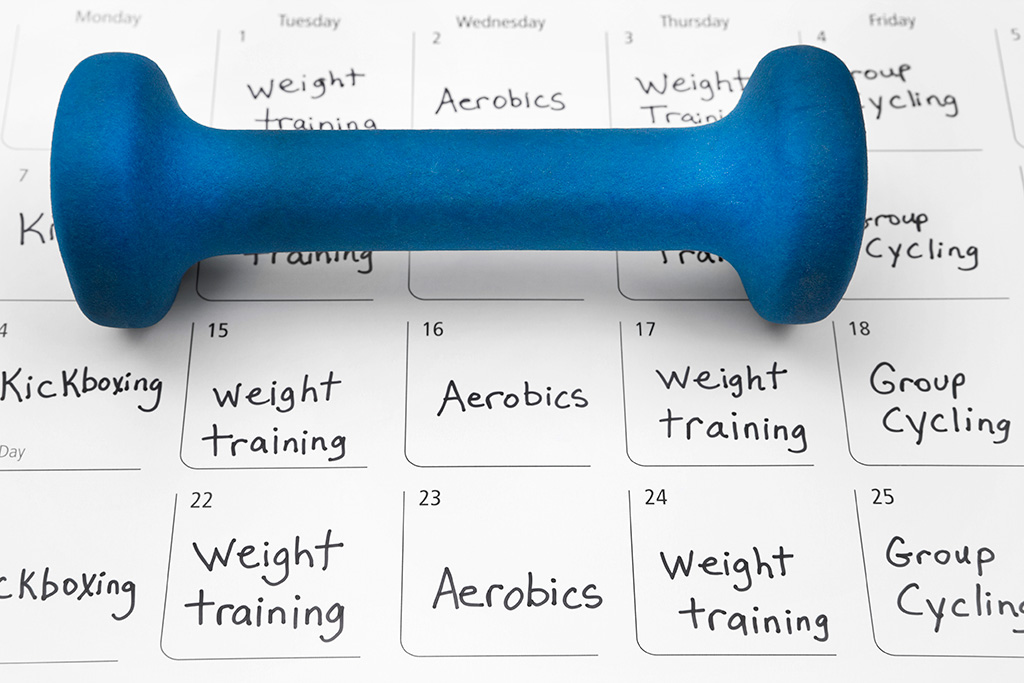
Write it down.
Make a list of reasons that motivated you to start exercising; then read them when your enthusiasm flags. Also, track what you do and your results. This can be especially helpful as you increase weights when strength training.
Start slow.
Your body will rebel at first. It’s important to avoid injuries, which will set you back.
Once you’re in the groove, increase your workouts. It might take some time to ramp up. Listen to your body.
Be kind to yourself and celebrate even small achievements (e.g., exercising three times this week; besting your walking pace; lifting eight-pound weights instead of fives; trying a new type of exercise).
Don’t let it get you down…
Couldn’t muster the resolve to work out for a week? Don’t beat yourself up—getting in shape and staying fit is difficult. Even the most devoted fitness fiends get knocked off their treadmills by illness, vacations, or work. If you miss more than a couple of weeks, shorten your usual workout to give your body a chance to bounce back. Recall how good exercising makes you feel, and set some immediate goals for getting back to your plan.
…But don’t make excuses.
Most folks find that while they dreaded starting a workout, they felt better during and after exercise, and were glad they did it. Remember that even if you don’t notice physical changes immediately, your body is benefiting.
Reassess and tweak.
Don’t be too rigid; you may find your original plan didn’t work out and you need to adjust it. Assess your fitness six weeks after you start your program. Then do it again every few months. How are you doing? You may need to add more exercise time or increase intensity or add a new activity into your regimen. Or you may find that you’re exercising the right amount to meet your fitness goals.
