

Last updated July 21, 2026
Private-equity firms and conglomerates have quietly bought up legendary clothing, furniture, and tool brands. As they try to squeeze more profits from these well-known companies, product quality often suffers.
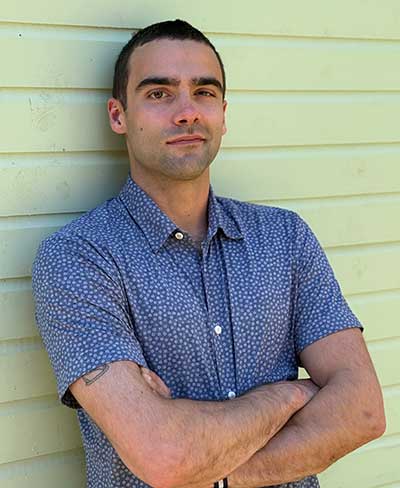 It’s a phenomenon tech entrepreneur Keyana Sapp digs into via his nonprofit online newsletter WorseOnPurpose.com, which includes the Brand Ledger, an adjacent database that tracks ownership of more than 200 major brands. Through detailed reporting and investigations, he dives into who now owns highly regarded brands like Black & Decker, Brooks Brothers, Dr. Martens, GE, and Sealy—and tries to determine whether their products are still high-quality. Sapp then judges brands as “Approved,” “Watchlist,” “Former Great,” or “Avoid.” We chatted with him for insights.
Checkbook: What made you create Worse on Purpose?
Keyana Sapp: Since I was a kid, I’ve taken things apart to see what’s inside, and then built new things out of the pieces. So I guess I developed an eye early on for what a product is actually made of and whether it was meant to last. As I got older, I started noticing a pattern in the things I used every day, especially in electronics, where products were getting harder to repair and the parts inside were getting cheaper. It began to feel less like ordinary cost-cutting and more like a deliberate choice to build things that fail.
That lined up with a shift I’d noticed in how we shop, a lot of it driven by social media and the constant pull toward the next new thing. Brands adapted by competing on how fashionable they were instead of on quality. I started Worse on Purpose to tell the stories behind that decline (who bought what, what changed after the deal, and how you can see it in the product itself). The Brand Ledger grew out of that as the running record, so a reader can look up where a brand stands and why.
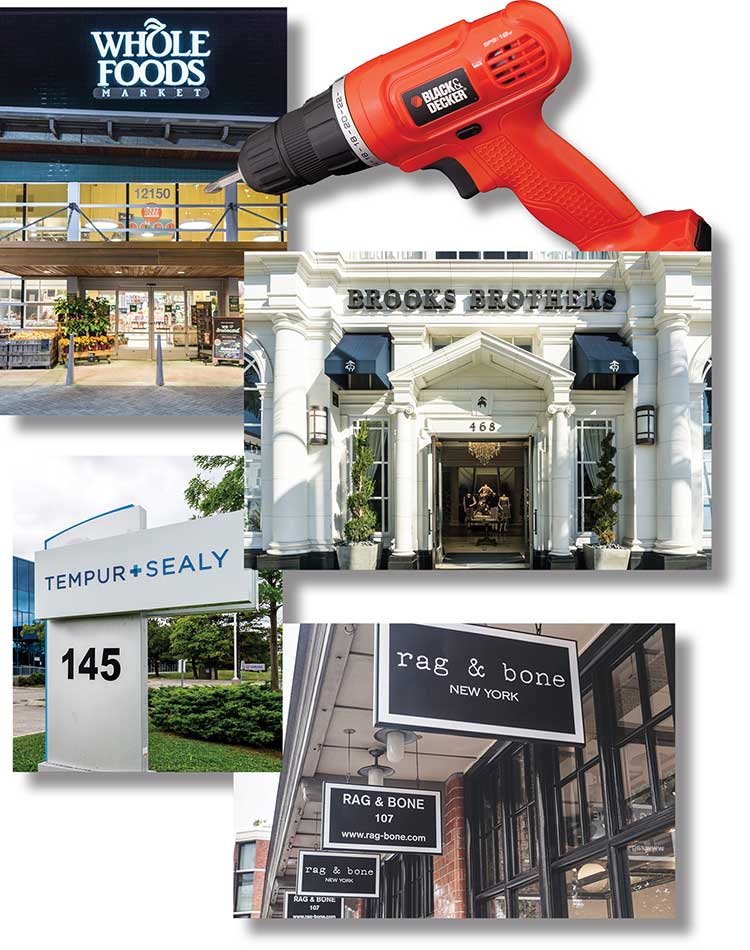
CB: Do these new companies manipulate customers by taking over the reputations of these formerly good brands? Is this part of why they buy up the likes of Brooks Brothers and Rag & Bone?
KS: The mechanism is simple. A brand earns trust over decades by doing three things well: Making genuinely good products, capturing a cultural moment people remember, and standing behind what it sells.
Few companies hold all three for long. The business falls off through mismanagement or shifting trends. The reputation doesn’t fall at the same rate. It lingers for years after the quality is gone, and that lag is the asset. That lingering goodwill is what gets bought, usually by a private-equity firm or a brand-licensing house. The playbook is extractive. They relaunch a loved name with a marketing push, then defend their margins by cutting quality and offshoring production. The name gets licensed onto whatever sells.
CB: What’s a good example of one of these lagging brands?
KS: Brooks Brothers is a clean example. [The original company] filed for bankruptcy in 2020, and Authentic Brands Group bought its intellectual property. A joint venture of SPARC, ABG, and Simon Property Group run the stores. Rag & Bone went the same way in 2024, bought by Guess and WHP Global.
In both cases, the first thing to change hands was the name and the trust attached to it. People won’t tolerate the quality drop forever, so the cycle stays short. That suits private-equity timelines. It’s also why the model has spread so far.
CB: How do you research your stories and rankings?
KS: My audience is amazingly helpful in surfacing categories that are worth a look. Once I’ve picked the next category, the real research begins. The reassuring part, and the slightly damning one, is that almost all of this information sits in the open. Acquisitions are public record, the deals get announced in press releases and SEC filings, and private-equity firms list their portfolio companies on their own sites. So mapping who owns what is mostly patient assembly.
Reddit is where I track the human side. Long threads going back years are the best record I’ve found of a product quietly getting worse. A brand that changed hands in 2018 usually shows a complaint pattern starting soon after. From there I read firsthand reports and study the spec sheets. Then I line up the ownership timeline against the quality timeline, and the story tends to assemble itself.
Everything in the Brand Ledger carries its sources, and every status change gets logged with a reason. A reader can (and should) check my work rather than take my word for it.
CB: On the Brand Ledger, you classify brands by categories from “Approved” to “Watchlist” to “Avoid.” Have any brands moved from the “Avoid” list back to the “Approved” list?
KS: Not yet. But I’d be glad to make that move when it’s earned. There are surely brands out there bought by owners who actually care, those that turned things around. If one clears the bar, I’ll log the upgrade happily.
Ownership by a new big parent isn’t an automatic death sentence for a brand, which is what the “Watchlist” section of my website is for. Plenty of brands sit there, owned by a conglomerate or a private-equity firm, still making good products. Milwaukee Tool is a fair example. A large holding company owns it, but the tradespeople who depend on it still trust it. A “Watchlist” spot means the products are still good, and I’m just paying attention. If the quality slips, the receipts are already on file.
CB: Which sources of information about companies do you trust nowadays?
KS: As much as possible, I go to firsthand accounts from people actually using the thing. That rules out Amazon reviews, which I think are thoroughly gamed (if you even shop there anymore). A lot of what passes for reviewing online is paid marketing. That includes most “best of the year” lists, which mainly run on affiliate payouts.
What I trust is the small set of independent voices in each category who clearly haven’t sold out. The “Project Farm” channel on YouTube is the one I always name. He runs objective, head-to-head tool tests, and I love them. Most categories have someone like that if you look. I’m also a spec-sheet guy. It’s harder to fake than the marketing copy. I read the materials list closely: what the product is made of, whether the wood is solid or veneer, that kind of thing.
CB: How can consumers suss out which brands are still good and who is just BS-ing us? Are there hallmarks of quality anymore?
KS: The most useful habit is to learn who owns a brand before you walk into a store. That tells you a lot about where it’s headed.
The hallmarks of quality haven’t changed; they’ve just gotten harder to find. Standing in front of an object, I ask a few things. What is it made of? How good are the raw materials? How does the joinery or the stitching look up close? Does it look like something made by a person who actually cared?
The hard part now is price. The objects that pass those tests sit [at prices] a lot of us can’t reach, or they come from small makers you have to hunt for.

CB: Are there particular categories of goods where consolidation and “worsification” are rampant?
KS: Almost all of them, honestly. Eyewear is the category I point to first.
CB: Yes, Checkbook has been covering this problem for years.
KS: A single company, EssilorLuxottica, makes or licenses a huge share of what’s on display at eyewear shops, from Ray-Ban and Oakley to Persol and Oliver Peoples. It owns the stores you’d shop them in, too: LensCrafters, Sunglass Hut, Pearle Vision, Target Optical. Even the online “alternatives” like EyeBuyDirect and Glasses.com belong to it.
Mattresses are nearly as concentrated. Tempur Sealy owns Tempur-Pedic, Sealy, and Stearns & Foster, the three “competing” premium names on most showroom floors. In 2025 it bought Mattress Firm for around four billion dollars. The largest manufacturer now owns the largest retailer. The same Sealy model sells under different store-specific names, so you can’t price-compare it. It’s a mess.
CB: Are there any other categories where consolidation is mucking things up?
KS: Food hides a layer below what you can see. A distributor like Sysco or US Foods supplies a staggering range of different restaurants—it’s why the menu at a lot of independent-looking places tastes oddly familiar.
Power tools collapsed the same way. Stanley Black & Decker holds DeWalt, Craftsman, and Irwin under one roof.
Another interesting category is pet care. It’s the best example of how invisible this type of consolidation can be. Mars, the company behind M&M’s and Snickers, is also one of the biggest forces in the pet industry. On the veterinary side, it owns Banfield, BluePearl, and VCA. On the food side, Royal Canin, IAMS, and Pedigree. The same name behind your candy sits behind your vet visit and your dog’s dinner. Most people have no idea.
CB: I loved your recent story about buying a mattress. But I don’t think many consumers go that deep when making a major purchase. How do you recommend people become more informed, besides reading your newsletter?
KS: There’s plenty of good information out there. The single best move in my opinion is to find a person/creator whose judgment you trust in a category and take their recommendations seriously.
So many reviews are bought that firsthand experiences on forums like Reddit are genuinely useful. A quick search usually surfaces them. I’ve had good luck DM-ing users on years-old threads for an update on a certain product’s longevity.
Past that, it takes time and attention. You’re right that most people won’t spend it on a given purchase, and that’s fine. The work I do is meant to provide the research already done and waiting. When you do care about something, the answer should take five minutes, not a weekend.
CB: If we can’t trust old-school brands, how do we find quality things to buy?
KS: I don’t think it takes that much effort to find products worth buying. I’ll give almost any brand a chance. But I weigh two things heavily: how a company builds the product, and how it treats you after the sale. One bad experience on either count, and I stop buying. That rule does a lot of work over time.
The good news is that, thanks to the internet, more people make excellent things in every category than used to, including small family shops you can now reach directly. That’s where I’d put my attention. You’ll often pay a bit more up front. In return, you usually get something that lasts longer, and a company that helps you out when it doesn’t.
I’m excited to cover some of those more positive stories in the future!
CB: Restaurants, mattress stores, power tools—you’ve done a lot of interesting investigations. What’s next?
KS: Appliances and grocery stores are both coming up. There’s so much to dig into in almost every category that running out of material isn’t a worry.
