

Options for Body Disposition After Death
Last updated November 2026
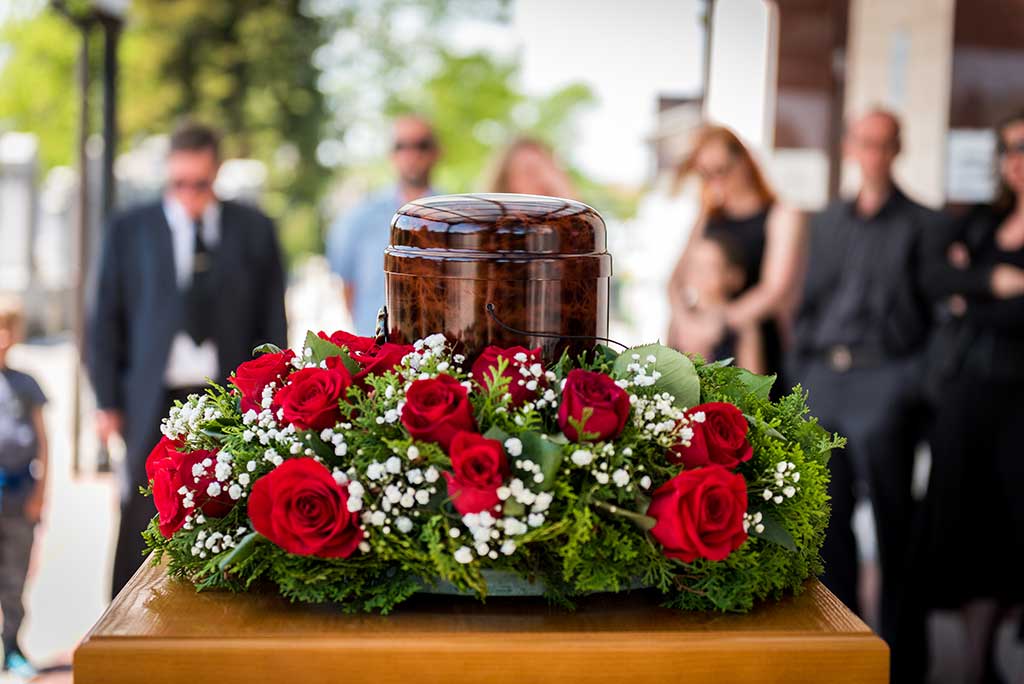
There are several options for what to do with a deceased person’s remains.
Burial
The traditional choice is burial, which can be done directly, with no viewing or ceremonies, or with any combination of viewing, ceremony, and graveside service. It usually requires a casket; cemetery plot; fees to open and close the grave; cemetery endowment (upkeep); and a marker, monument, or headstone. Most cemeteries also require a grave liner or vault. Though most burials are below ground, another usually more expensive option is burial above ground in a mausoleum.
Immediate burial is the least expensive option: A funeral home files the necessary paperwork, places the unembalmed body in a casket, and takes the remains to a cemetery for burial, usually within one day. This alternative eliminates expenses for embalming and some expenses for funeral home facilities, and most families choose a lower-priced casket.
Increasingly popular “green burials” place an unembalmed body in a biodegradable casket or cloth shroud and bury it. The cemetery is planted with native vegetation rather than grass, and graves may be marked by native trees, shrubs, or fieldstones. Instead of looking like a cemetery, the land becomes a natural greenspace.
To learn more, visit the Green Burial Council website.
Cremation
Cremation means neither a casket nor embalming is required, but if the body must be held for several days, refrigeration or embalming may be necessary. Cremation, like burial, can be direct or following a funeral. It is also possible to have an embalming, viewing, and ceremony followed by cremation. Some funeral homes offer rental caskets for cremation; others sell modest cremation caskets. Cremation also allows flexibility as to when or where services are held—many families now hold memorial services in their own homes or at the deceased’s favorite place.
Cremated remains (“cremains”) may be scattered, kept at home, buried in a cemetery, or interred in a columbarium (an above-ground structure containing permanent niches). Burial in a cemetery or placement in a columbarium adds to the cost.
Alkaline Hydrolysis
Also called “water cremation,” this is a relatively new option that is promoted as more environmentally friendly than cremation. Instead of being burned, the body decomposes in an alkali and water-based solution placed under high pressure. The process produces a combination of liquid and bone ash, which can be scattered.
At the time of this writing, alkaline hydrolysis was legal to perform in 26 states; click here for an up-to-date list. Residents of states where the process isn’t yet legal can still ask funeral homes in their areas to coordinate alkaline hydrolysis out of state.
Donation
Whether a body is to be buried or cremated, it can first be donated to improve the quality of life of others or offer the gift of life itself. Donation of at least some body parts is an option for almost anyone, regardless of age or medical history.
Individuals can donate organs or tissues or their whole bodies. If you wish to become a donor, have your intent to be an organ donor indicated on your driver’s license. Or register online with Donate Life America. It’s also a good idea to fill out an organ donor card and carry it with you at all times. And inform your family of your wishes, since permission of next of kin is required.
If you wish to make a whole body donation, make prior arrangements with a medical school. With the exception of removing corneas, whole body donation usually precludes the donation of individual organs or tissues for transplants.
After organ and tissue donation, you still need to make funeral arrangements. If you want to donate your body to a medical school, your family likely will have to pay to transport your body and for eventual disposal by cremation or burial.
