


Consumers’ Checkbook began with a car repair story gone wrong.
In the early 1970s, Robert Krughoff was driving his 1968 Opel Kadett away from an auto repair shop for the third time when he realized the engine was still on the fritz. Fed up with lousy work and unable to find reliable info about alternative repair shops, he thought, “There should be a Consumer Reports for local services.” A few years later he founded Consumers’ Checkbook to provide independent, unbiased resources to help people make better choices.
Over the past 50 years, Checkbook has pioneered ways to help consumers, publishing unbiased ratings, detailed price comparisons, investigative reporting, and practical advice. Checkbook carries no advertising and takes no money from companies or professionals we evaluate. That independence ensures our work is guided by the interest of consumers.
As Checkbook approaches its second half century, our mission remains the same: Provide consumers with information they can trust to help them get good service and avoid costly mistakes. In a world where it is increasingly difficult to know whom to trust, Checkbook is more valuable than ever.
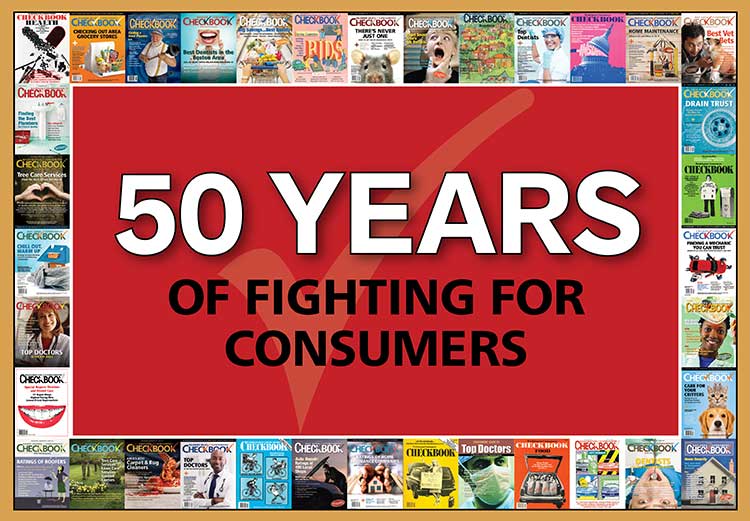
Tips Down Memory Lane: Looking Back on Five Decades of Advice
For 50 years, Checkbook has been digging into prices, sniffing out scams, and trying to help consumers make sense of the sometimes-confusing task of getting good deals on medical and household services. Some of our wisdom from decades ago has aged well—or even predicted the future! But in some cases, our crystal ball was a little cloudy.
Here’s a trip down memory lane. Much of our guidance and research still holds. But in some areas, things changed significantly.
Hasn’t Changed
Our advice about dentists remains similar today to what we said in 1976:
“Whatever your dentist charges, the cost of dentistry will be high if you are overtreated.”
Hasn’t Changed
By 2000, Checkbook was discussing how the internet was going to change shopping forever.
“The internet is a powerful tool for consumers who wish to do comparison and competitive shopping...this gives consumers unprecedented power to level the playing field of the American marketplace. That power comes, however, with a new set of consumer pitfalls and increased need for vigilance.”
Has Changed
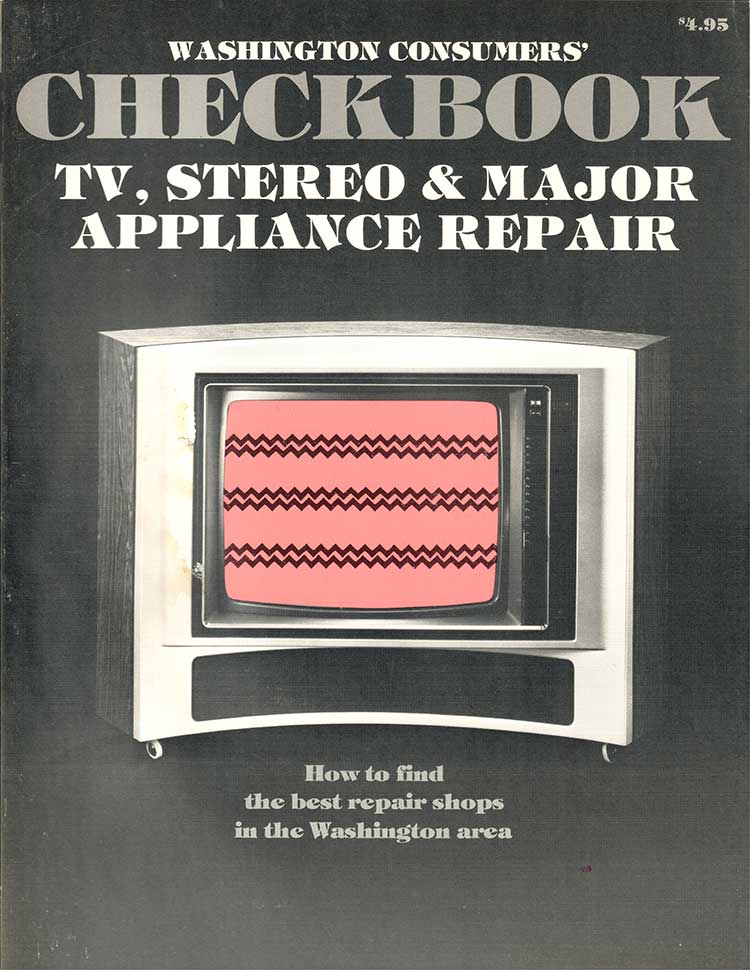
TV repair work was one of our most popular topics in 1978. That was because, as we told subscribers:
“You will almost certainly need to have your TV set, or sets, repaired—probably once every year or two if it is a color TV.” Today’s TVs are bigger, better, and much more reliable.
Has Changed
In 1980, long before Kayak and Google Flights, we reported on the newfangled concept of travel agents using computerized reservations systems. Today, anyone with Wi-Fi access can be their own agent.
“These systems cover most domestic and international flights, and about 75 percent of travel agencies have acquired terminals that allow online access which allows them to check on flight schedules, availability of seats, and prices. It also allows them to enter reservations directly.”
Has Changed
In olden days (well, 1976), Checkbook counseled readers:
“Savings certificates have given higher returns relative to bonds, stocks, and other options in recent years…Currently you can buy six-year CDs with effective annual yields of 8.17 percent.”
But in the decades since, the stock market stopped being sluggish, and interest rates eventually dropped (and stayed that way for years). In the 2020s, stocks have consistently yielded better returns than most other investments.
Hasn’t Changed
In 1978, before the term “food desert” existed, we pondered the issue of inner cities suffering from a lack of grocery stores.
“A number of studies and books since the early 1960s have argued that inner city consumers pay more and get less for their food dollars. Without a car, traveling a mile or so with groceries is a significant hardship.”
Has Changed
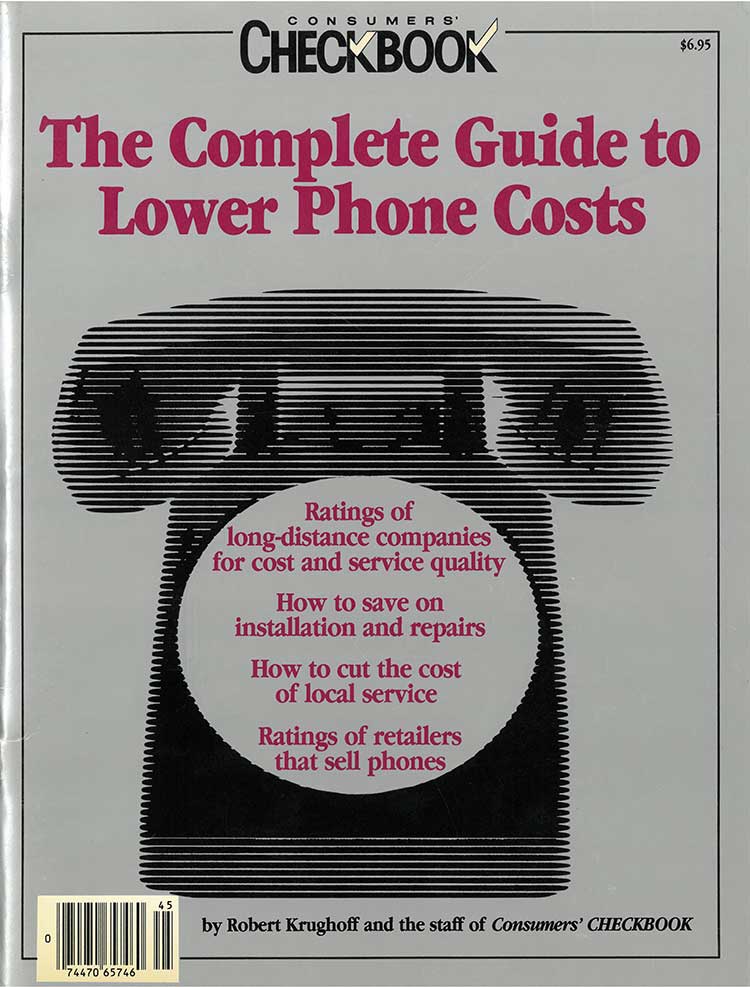
Checkbook used to devote considerable time and magazine ink to covering long-distance phone costs. (In 1984, we even published a 64-page guide to all the service options after anti-trust lawsuits broke up the phone company monopolies.)
Today, we may be slaves to our phones, but paying 25 cents a minute to talk to grandma in Grand Rapids is long gone.
Hasn’t Changed
In 1977, Checkbook nailed the reason banks had started issuing so many then-low-profit credit cards:
“Despite weak profits, banks continue to enter the market. Many see credit card operations as a way to get technology ready for future electronic funds transfer systems.”
Hasn’t Changed
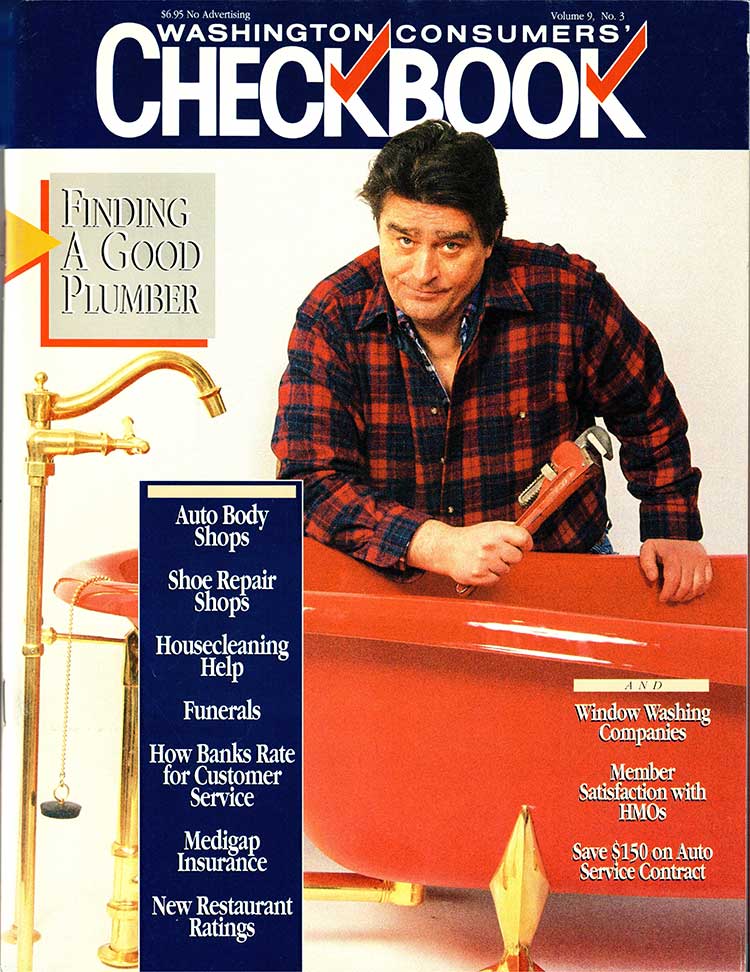
When Checkbook wrote about plumbers back in 1977, we said:
“Probably the most valuable leverage you can have is the right to hold payment until work is complete.” This still holds true for any service provider you hire, from roofers to repair shops.
Has Changed
In 1982, Checkbook asked readers:
“Is a personal computer going to replace your typewriter, calculator, and television set? Many who work in the personal computer industry think so. Most consumers, on the other hand, can hardly imagine a computer in their daily lives—and many don’t want one.”
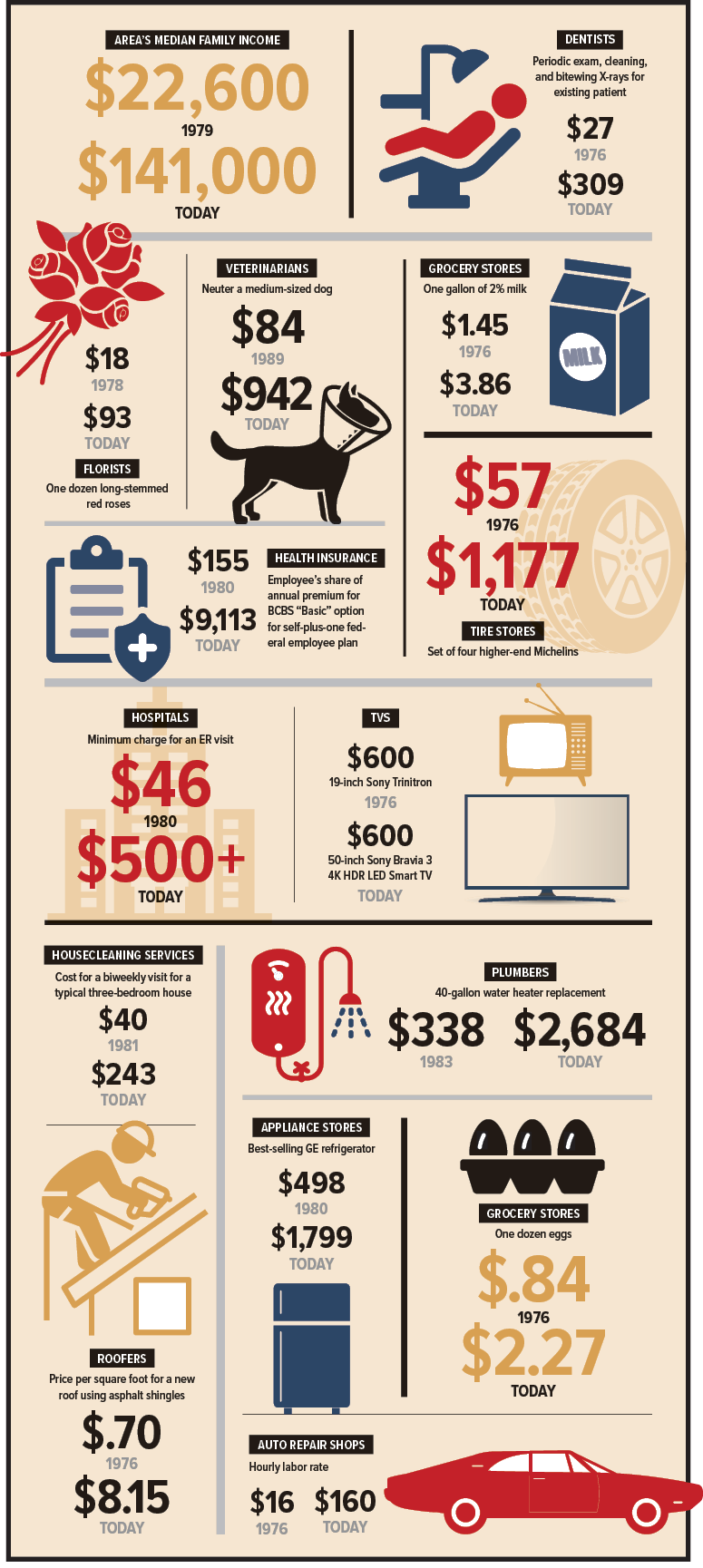
Then & Now: How Prices Have Changed
Over 50 years, researchers at Checkbook have collected over a million prices on everything from the cost of groceries to how much a new roof will set you back. Along the way, we’ve discovered that great services often come with low prices and that it’s always worthwhile to shop around. Here’s a taste of what we’ve priced out. Don’t you wish you had a time machine?
Lessons Learned from a Half Century of Fighting for Consumers
Consumers’ Checkbook has been around for 50 years, and many of our staffers have spent decades advocating for consumers. Five of them—president Paul Kallaur, executive editor Kevin Brasler, managing editor Andrea Densmore, contributing editor Herb Weisbaum, and director of marketing Kevin Moss—have spent more than 160 years combined doing this work. Here’s what they’ve learned.
What’s Checkbook’s mission? Has it changed?
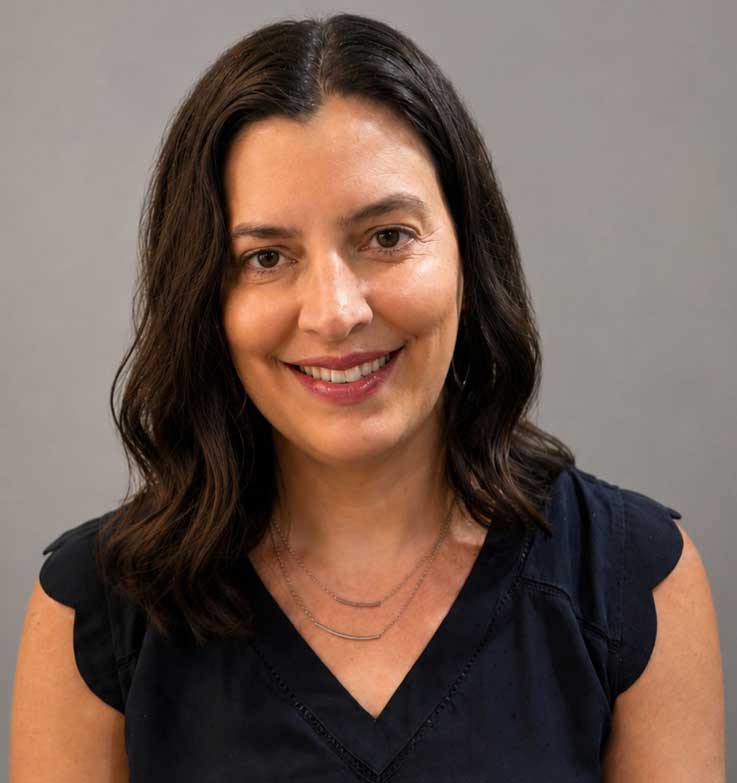 Andrea Densmore: Checkbook’s mission has always been to help consumers make informed decisions by providing unbiased, trustworthy information and advice. That came directly from our founder, Robert Krughoff, who started Checkbook in 1976 with a deep empathy for consumers, a creative approach to research, and a determination to get the facts right.
Paul Kallaur: Our purpose has remained consistent: To help consumers make better decisions and to encourage the service providers they rely on to improve. What has evolved is the scope of our work and the way we gather and share information. Our commitment to independent, trustworthy information hasn’t changed.
Kevin Brasler: The internet overhauled how consumers shop and find service providers, but the pitfalls are no different than they were 50 years ago. I read through our past issues working on this, our last print magazine, and I was struck by how little our core advice has changed. It’s still so difficult to know who to hire and how to navigate the service industry. That makes Checkbook more valuable than ever.
What are the keys to Checkbook’s success?
Kevin Moss: Our members’ generosity always surprises me. Last year we received more money from donations than we did from subscriptions.
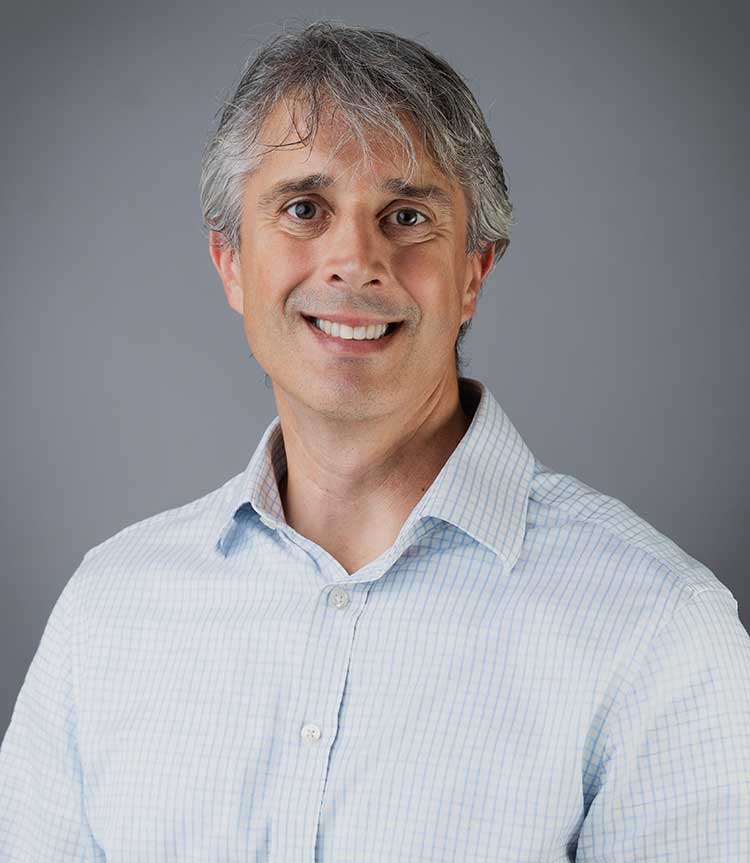 PK: Our success comes down to independence, innovation, and rigor. We’ve always worked hard to make sure our research and recommendations are guided by consumers’ interests, not industry influence. Plus, we have incredibly thoughtful people developing creative, transparent, and well-documented ways to compare the quality and value of services.
KB: Our members aren’t just generous—they’re incredibly insightful.
I love hearing from them; most of our ideas for new content come from subscriber feedback.
Herb Weisbaum: People trust us. Because we don’t accept any advertising or have ties to the businesses we evaluate, they know we’re always going to be straight with them.
How has Checkbook been innovative over the years?
KB: We’re stubborn and resourceful. Sometimes finding answers to complicated questions means being quite creative. Especially before the internet, we often had to scrounge for data, like measuring hospital ER quality by not only surveying patients but also sending researchers to EMS stations to get opinions from paramedics and EMTs. We’re still devising ways to conduct investigations, like renting a house to test home inspectors. And we spent years pushing the federal government—including filing a lawsuit—to release data that would let us compare surgeons’ performance for high-risk procedures.
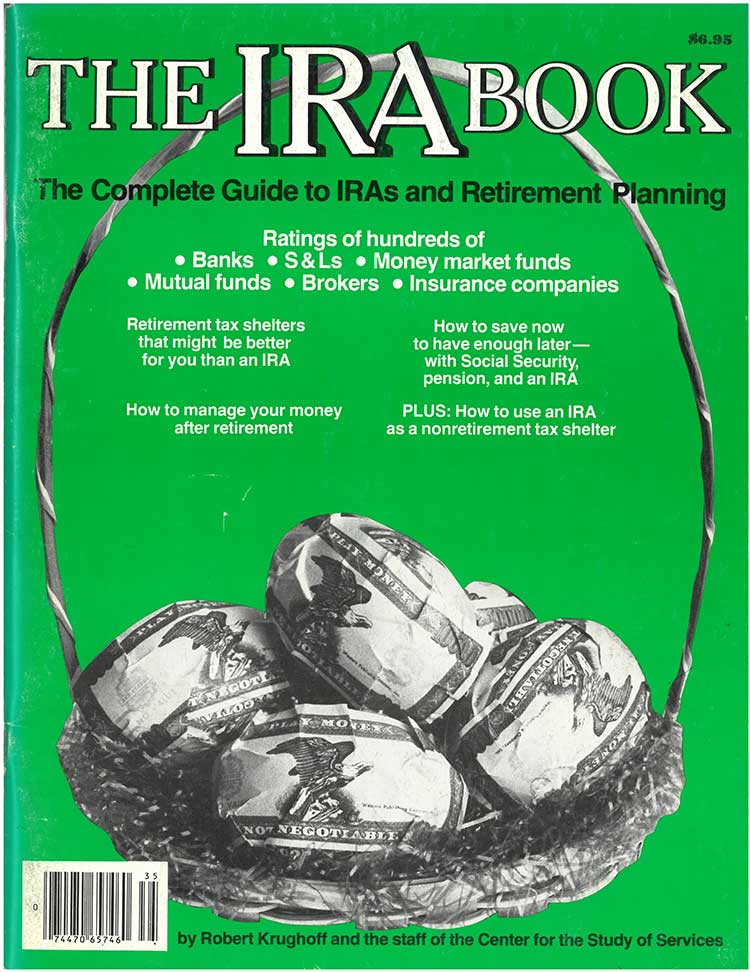
KM: Our entire team has always sought information that consumers need to make good choices, and sometimes those resources didn’t exist, so we created them. We've done several groundbreaking projects, like the first evaluations of doctors, hospitals, and IRAs. Checkbook also pioneered tools to help employees find the lowest cost health insurance options. We’ve saved families thousands of dollars.
AD: Checkbook has looked out for marketing claims and practices that deserve closer scrutiny, whether it’s tracking sale prices over time (which revealed that some products are always “on sale”) or monitoring travel websites testing claims about limited hotel availability.
What problems still plague consumers?
HW: I’ve been covering the consumer beat for 45 years, and the types of scams I warned about in the 1980s are still around today. They’re delivered in different ways—robocalls, text messages, social media ads—but they still use the same playbook. Marketers and scammers get you to act before you think by triggering strong emotions: fear, greed, love, curiosity, and loneliness. Plus, AI is making it easier to target more people with more sophisticated cons.
 KB: Fraud is at epidemic levels. We are now up against organized criminal rings and foreign governments using AI and state-of-the-art computer programs to steal our money and personal information. Many are overseas, so it’s extremely difficult to stop them.
AD: Unlicensed contractors continue to cause huge headaches. They’re still the number one reason for complaints filed with consumer agencies.
KB: Overall, we also continue to see really bad businesses abuse their customers with terrible service, bonkers-high prices, broken promises, and unfair policies. Some companies are out to make money and don’t care about doing the right thing.
What have you learned about prices over the years?
AD: After more than 25 years of managing our price collection, I’m still astonished that some companies charge double or triple what others do. For local services, the saying “you get what you pay for” is largely a myth. Great companies often charge low prices and bad companies often charge high ones. The lesson? Get at least three quotes, especially for large jobs. The savings can amount to thousands of dollars.
 KM: When selecting a health insurance plan, consider out-of-pocket costs, not just premiums. Sometimes that means doing a lot of math. For decades, Checkbook has provided models and data to help consumers make these decisions.
AD: Many retailers and industries for years have deliberately made it very difficult to compare prices—that’s especially true for mattress and carpet stores. But we’re now seeing Home Depot, Lowe’s, and other big-box retailers selling items that you won’t find elsewhere.
HW: As Andrea said: Shop around! I recently saved $1,000 on a hot tub water heater by doing a 60-second online search and $1,000 a year by shopping for new home and auto insurance.
How has the internet helped consumers? Or has it hurt them?
KB: The internet has made it easier to compare prices for big-ticket items, like TVs. It’s also much easier to shop for airfare, which used to be a huge pain.
 HW: On the other hand, data about everything we do online is now collected, shared, sold, and used to market things to us. Consumers have very little control over their data. Plus, identity theft and financial fraud have soared, largely driven by online scams.
KM: There are online reviews for everything, but they aren’t terribly trustworthy.
In the last five decades, we have become a nation of over-consumers. What happened?
KB: Marketing became even more powerful. Americans buy so many things they don’t need but also get bombarded by marketing pushing them to spend money on worthless products and services, like service contracts, trip protection, and duct cleaning.
HW: Buy now, pay later plans are making consumerism worse. Shoppers convince themselves that they’re spending less at that moment and thereby spend more.
AD: Still, there are some positive signs, like the Buy Nothing movement and the rise in popularity of thrift stores and other secondhand shopping.
Who wants the last word?
KB: I’ll take it! I think all of us can agree that we feel fortunate that we are doing something that we consider our life’s work. We’ve all stuck around this long because we love fighting for consumers and working with our entire team.
