

Finding the Right Car Detailer
Last updated November 2026
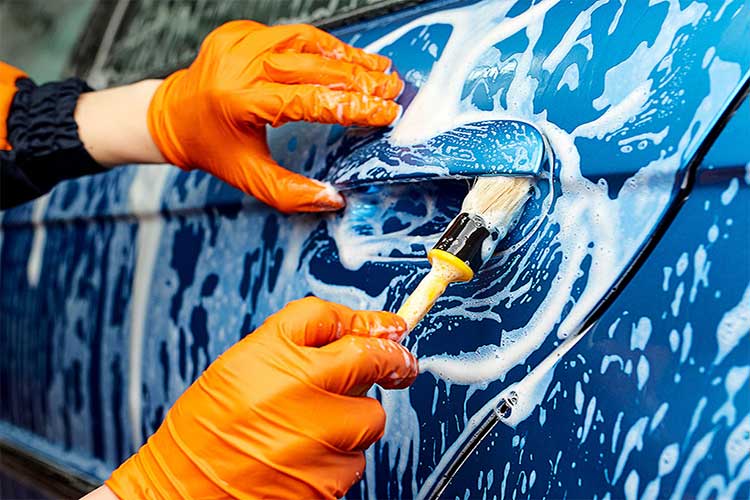
Our Ratings Tables report how area consumers we surveyed rated auto detailers. We primarily surveyed Checkbook members, but also invited other randomly selected consumers to participate.
We asked customers to rate services they’ve used as “inferior,” “adequate,” or “superior” on questions such as “doing service properly,” “promptness,” and “overall quality.” For companies that received 10 or more ratings on our surveys, our Ratings Tables report the percent of each service’s surveyed customers who rated it “superior” (as opposed to “inferior” or “adequate”) on each of these questions. Click here for further discussion of our customer survey and other research methods.
Some detailers received “superior” ratings for “doing service properly” from more than 90 percent of their surveyed customers, but others received “superior” ratings from 60 percent or fewer.
You can also perform some quality checks yourself:
- If you’re considering a brick-and-mortar shop, rather than a mobile operator, ask to see other customers’ detailed cars.
- If your car is in particularly bad shape, ask the shop what problems it can and can’t solve.
- Assess the shop’s cleanliness and orderliness—a messy, unorganized facility might signal sloppy work.
- Ask whether the shop uses a three-step polishing process—polishing, buffing, and waxing—or the less effective one-step one.
- Ask how the shop cleans carpets. Most use hot-water-extraction equipment, which is usually the most effective method; if not, ask it to describe, or show, its protocol.
- Ask how long the service will spend detailing your car. A company that takes only an hour or so probably isn’t providing the same service as those that take half a day.
- Ask for proof that the company carries current liability insurance to cover the cost of repairs if your car is damaged.
- Make sure the operator of a mobile detailing service is following Environmental Protection Agency rules, which require operators to use a runoff reclamation system. These systems place a mat under the car to capture all water runoff during washing. After washing, the runoff is sucked up from the mat back into the detailer’s water tank.
Most services will quote prices for basic detailing jobs over the phone, so it’s simple to compare prices. For the companies listed on our Ratings Tables, our undercover shoppers asked each business for its prices for a basic detailing of two sedans, a minivan, and an SUV; The table below illustrates the range of prices we found. The price comparison scores on our Ratings Tables indicate how each company’s prices compared to the average prices quoted for the same jobs. For instance, if one company has a price comparison score of $120, while a second company has a score of $100, it means the first company’s quotes were 20 percent higher than the second company’s.
You can save on detailing by doing it yourself. Detailing equipment and products are relatively inexpensive and widely available at automotive supply shops, hardware stores, and discount retailers. When buying supplies, be wary of products that make grandiose claims about their effectiveness—for example, “Never wax your car again!” No wax will last more than six months or so, even under optimal conditions.
Click here for tips for washing your car, the most common do-it-yourself detailing work. Although most of us want to leave advanced detailing work such as polishing and buffing paintwork and cleaning engines to the pros, keep in mind that completing even these specialized tasks primarily requires elbow grease and time, rather than expertise. You can find step-by-step, do-it-yourself guides in books and via online videos.
