

Picking the Right Locks for Your Home
Last updated June 2026
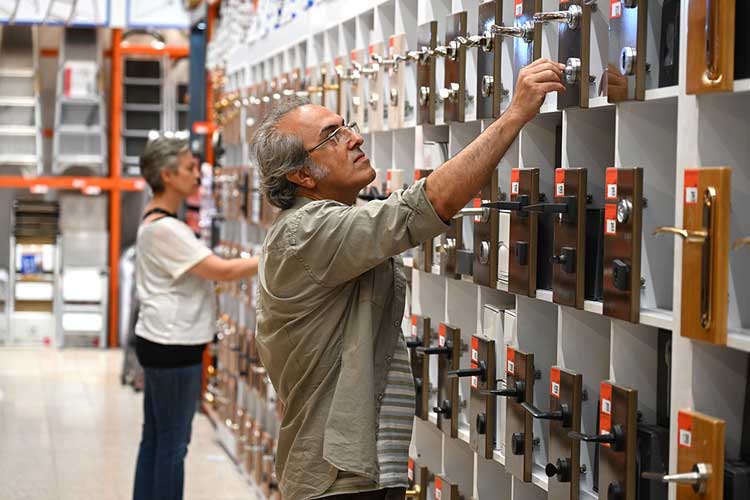
Our Home Security section reveals how taking some basic steps to secure the perimeter of your home will be more effective at preventing intrusion than installing a burglar alarm and cameras. Start by making sure all your home’s exterior doors have good locks—and remain diligent about using them.
Unfortunately, most locks—including many high-tech models—don’t provide good security. In its most recent evaluation of 145 models, Consumer Reports warns many “lack the level of protection you might want or expect. In our labs, a few well-placed kicks or a couple of minutes under assault from a cordless drill are all it takes to defeat almost every lock in our ratings. That goes for conventional deadbolts, electronic locks with keypads, and smart locks—those you can operate from a smartphone, smartwatch, or smart speaker.”
Unfortunately, you can’t test the fortitude of your existing locks without possibly breaking them or your doors. But there are ways to spot signs of quality and steps you can take to beef up lousy locks.
Types of Locks
All your home’s exterior hinged doors, including doors leading to a garage, should be equipped with good deadbolt locks. Conventional models remain best sellers and affordable; electronic and smart locks are gaining in popularity, but CR recommended only one e-lock model.
Locks fall under a handful of categories:
- Key-in-the-knob locks have always been inadequate for security. They can usually be quietly shimmied open or defeated too easily by kicking open the door.
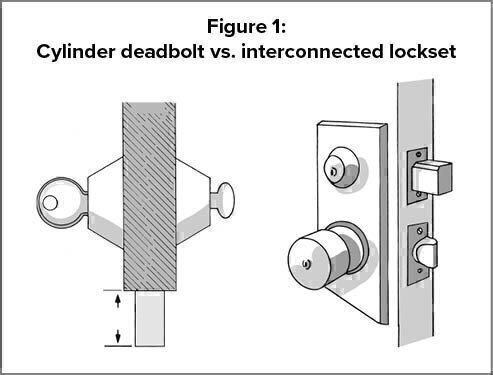 Cylinder deadbolts (also known as “tubular deadbolts”) have been standard on many houses since the 1950s (see left half of Figure 1). A substantial portion of the mechanism is located within the door. The latch is a horizontally movable bolt extending into the strike plate on the doorframe; it is controlled by a key, electronic keypad, or remote signal. When engaged, the bolt should extend at least one inch beyond the door. Also, unless a heavy beveled collar extends out from the door on the outside, it may be easy to defeat. Cost: $10-$75 or more, $75-$400 for electronic or smart models.
- Interconnected locksets. These are a combination of a key-in-the-knob lock and a tubular deadbolt (see right half of Figure 1). The interconnect device is hidden, but turning the thumb-turn opens both the deadbolt and the key-in-the-knob latches, a feature designed to facilitate quick exits. These locks are installed in six- or eight-inch-high hollows that weaken doors. If you already have good deadbolts, we advise against replacing them with interconnected locksets. Cost: $30 and up.
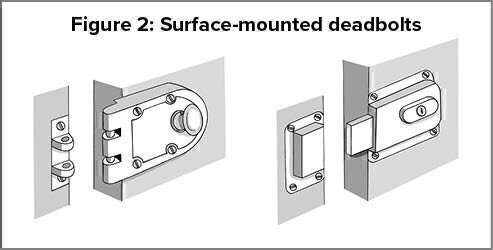 Surface-mounted deadbolts (also called “rim-mount locks,” “knuckle-locks,” or “vertical deadbolts”). Most of the mechanism of these clunky models is built into a casing that attaches to the interior side of the door (see left side of Figure 2). They’re easier to install than tubular deadbolts and generally stronger. Cost: $10-$40.
- Horizontal deadbolts (also known as “horizontal rim locks”). These are similar to surface-mounted vertical deadbolts except that their latches move horizontally (see right half of Figure 2). If the latch extends out for at least an inch, these locks can be quite effective. Cost: $20-$40 or more.
Most electronic and smart lock models fall under the cylinder deadbolt category.
Aside from their keypads, electronic locks aren’t very different from key-only models. The main advantage of electronic models? You can share your PIN with guests or workers and then easily change it later, rather than worry about a key getting lost or someone making a copy of one without your knowledge. For both conventional and electronic deadbolts, selection ranges from flimsy to high-end-and-high-security locks that can withstand even drilling attacks.
Smart locks offer a big advantage: They can be programmed to operate via cellphone or other devices. You can program a lock to sense that your phone is nearby and open automatically, or use a fingerprint or facial recognition. And you can remotely unlock a door to allow in a dog walker, neighbor, or forgetful family member, and then relock it. Some smart locks can be programmed to operate via voice recognition (we’d use “Open sesame!”). Most also log entries and exits—bad news for curfew-breaking teens. The best thing about smart locks is that you never again have to worry about whether you remembered to lock a door; simply check its status using its app.
Some smart locks are configured to replace old locks entirely. But there are also retrofitted smart locks, which usually just add smart controls to the inside portion of your existing deadbolt. While retrofits are easier to install, and your existing keys will continue to work with them, since they use your existing deadbolt they won’t improve the strength of the lock.
Smart locks may be vulnerable to digital intrusion. Though there haven’t yet been widespread reports of burglars hacking them, you’ll need to maintain good digital security habits to avoid trouble.
Another downside of electronic and smart locks is that they conk out if batteries die—you’ll have to resort to using a normal key. Many models are also big and ugly, although manufacturers have begun to design and sell smaller options.
While smart locks offer several helpful features, in the end what matters most is whether they provide sufficient security. Unfortunately, Consumer Reports found most locks don’t. But there are ways you can batten down your hatches and latches.
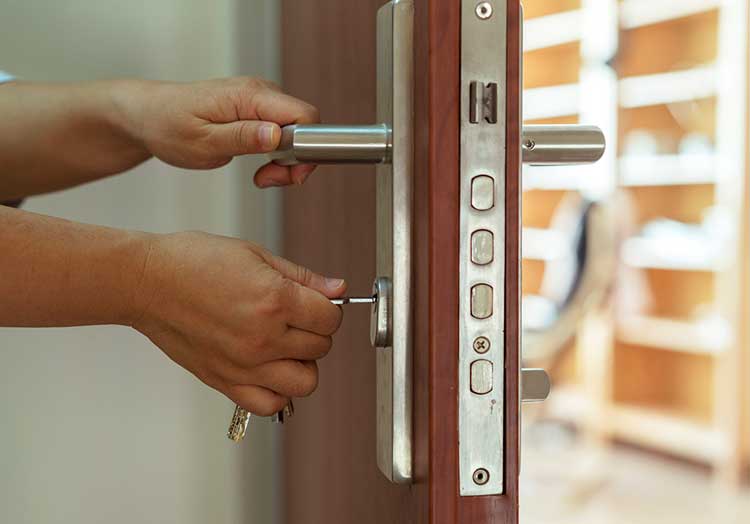
Beefing Up Your Locks
Begin by assessing what you already have. Not sure if your locks are up to snuff? Ask a locksmith to check them (most will charge $75 or less for a quick inspection).
Fortunately, with modest effort you or a locksmith can reinforce most deadbolts:
- Most locks come with puny screws; replace them with the longest, thickest steel screws that fit.
- If you want to protect against the remote chance that a burglar would pick your locks, replace cylinder locks with high-security ones.
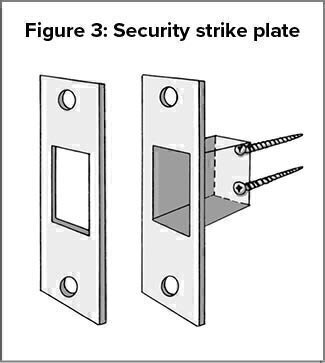 Most cylinder deadbolts and some interconnected locksets have weakly secured strikes for the doorframe, usually secured with two 3/4-inch screws. Replace them with two- or three-inch ones. An even better solution: Replace the regular strike plate with a “security strike” or “strike box” that has holes for additional screws. One type is about six inches long and has holes for four or six screws; make sure holes are at least one inch apart. Another type has a metal cup welded to the plate (into which the bolt protrudes) and extra screw holes in the bottom of the cup (see Figure 3). Most stores sell security strikes for $2 to $10.
- To install tubular deadbolts, two large holes are drilled in the door—one for the cylinder-and-lock mechanism and one for the bolt. The holes weaken the door, but you can reinforce it by installing a metal door channel around the door in the area of the lock. Brass-plated channels cost $10 to $40. Avoid channels that are less than eight inches high.
Deadbolts usually come with a keyhole on the outside and a thumb-turn on the inside for setting and retracting the bolt; this is called a “single-cylinder lock.” If you have a glass door, or glass panes in a wooden door, or glass near the door, consider the double-cylinder version. This replaces the inside thumb-turn with a keyhole that can be turned only with the key, even from the inside.
The trouble with double-cylinder locks is that they are less convenient to relock after entering the house, and are a hazard if your family must make a quick exit in the event of a fire, so much so that some jurisdictions prohibit them on exterior doors. If you install a double-cylinder lock, hang a key somewhere nearby and have your whole family practice locating it and opening the door while blindfolded (smoke from house fires often creates near-pitch-dark conditions).
There are several alternatives to double-cylinder locks. You can replace the glass with shatter-resistant glazing, or back up the glass with shatter-resistant glazing. You can wire the glass to an alarm or, if glass is built into the door, replace it with a solid-core door.
Relatively handy homeowners should be able to install most types of locks. You’ll need one or two special drill bits to make large-diameter holes with a 3/8-inch electric drill. Most people should be able to add a vertical or horizontal deadbolt lock to a basement door, or to a back door that does not need to be unlocked from the outside, by using a small bit to drill the screw holes. Discard the through-the-door cylinder assembly and retainer plate, and mount the rest of the lock on the inside of the door, as it would normally be installed.
