

Last updated July 2026
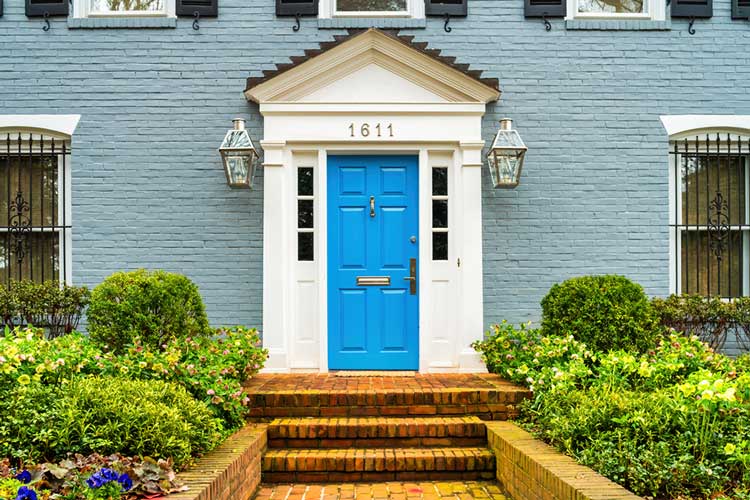
Replacing a worn door can provide an effective improvement to your home’s look, but it’s often an astonishingly expensive project, with some models costing more than $5,000, including installation. If you choose a high-priced supplier, it’ll be an unnecessarily expensive project: Our undercover shoppers found some area companies charge hundreds of dollars more than their competitors to supply and install the exact same door.
To get started, zero in on the type and style you want. In the past, your choice was limited to all-wood models, but now you can find doors in fiberglass, metal, and other materials. Also consider size, function, hardware, and security features. We discuss the pros and cons of each choice, how to find the right supplier, and share results of our price shopping.

Pre-Hung vs. Simple Replacement
If a door’s frame is in good shape, and you don’t want to change the size of the opening, you can simply swap in a new replacement door, also called a “slab” or “blank.” If the door’s surround isn’t sound, you’re better off buying a frame-door combo, an all-in-one assembly that ships ready-to-install, with doors pre-hung in a frame and jamb, with hinges, weatherstripping, and hardware.
While purchasing just a replacement door is less expensive, the downside is they come in far fewer style and size options, compared to the more common framed-door option. And if you’re replacing an old worn door, its frame also probably is in bad shape. So most homeowners buy pre-hung assemblies.
Materials
Wood looks great and offers thousands of style options in thousands of stain and paint colors. Although today’s wood doors are sturdy and resist the elements, they can still warp and crack and periodically need staining or painting. If your entry doesn’t have a porch or a protective overhang, don’t install a wood door without a storm door—sunlight and moisture will take a quick toll on even the best all-wood models.
Steel doors are framed in either wood or steel with a core filled with foam insulation, all wrapped in heavy-gauge galvanized steel. Most steel doors are embossed with a wood-grain pattern—but up close on most models that fake wood looks cheesy. Some higher-priced units are steel laminated with real wood. You can also order steel doors covered in a smooth skin that can be repainted endlessly. Although steel requires less maintenance than wood, steel can rust and become dented.
Fiberglass doors are usually wood frames stuffed with foam insulation and clad in fiberglass. Unlike steel, they won’t rust or dent. But like steel, fiberglass often doesn’t look like wood.
Aluminum doors are usually the least expensive and almost completely maintenance-free—many come with 20- to 30-year warranties. But most models dent easily. Consider aluminum if you’re looking to replace a side or rear door, where appearance matters less and kids won’t make them a pocked mess.
Styles
After scrolling or thumbing through just a few catalogs, you might feel overwhelmed by options. A good way to narrow things down? Determine the size of the opening you have now or that you want to build. You’ll also want to pick a style that matches your home’s architecture and consider the decorative hardware.
Energy Efficiency
Most well-made doors minimize energy waste, but wood and fiberglass ones offer better insulation than metal. Check that any metal door you’re considering has a thermal break (a layer of insulation under its metal skin).
The big energy wasters for doorways are gaps and glass. Compare energy ratings of doors you’re considering and look for Energy Star-certified models. Then replace weatherstripping as needed.
Quality and Durability
When shopping, ask for samples (called “corner pieces”) to see how different materials look and to experiment with different stains and paints. For steel and fiberglass doors, make sure wood-look graining runs across the rails (horizontal parts of the door) and up and down the stiles (vertical parts).
Though you can’t easily judge how well various models will hold up, most modern doors are relatively sturdy. Keep in mind that the more wood in a door, the more maintenance will be required. Compare warranties: A longer one probably indicates a more durable door.
Security
Doors should fit snugly within the door frames, with no more than a 1/16-inch gap on either side. Your best defense is to install good locks on all exterior doors. Our sections on home security and locksmiths provide good advice on securing your home’s vulnerable spots.
If you want a door with built-in windows, make sure a robber can’t break one to reach in and unlock the door. Otherwise, buy a deadbolt lock that operates with a key from inside the home. But keep in mind that difficult-to-unlock doors pose hazards in a fire.
The last word in door security is a heavy-duty steel door in a steel frame with a high-security lock. A less costly step down is a metal-bar door installed a few inches outside an existing door. When doors are set into a brick or concrete-block structure, defeating them generally takes a lot of time and noise. The simplest kinds of metal-bar doors, which are usually installed along with bars over the windows, make your place look like a prison. But some fabricators make attractive decorative ones, and a few custom build them as individual pieces of art.
Where to Buy
Start by reviewing ratings of door installers here at Checkbook.org. Also check reviews of window companies, since most of them also install doors.
For the most part, companies receive favorable ratings for door installation work. But some companies create headaches for their customers even on simple jobs. Be especially wary of the contractors working for big home-center chains.
Shop Around to Save
You’ll find big-time price variation from company to company for the exact same doors and installation work. Our undercover shoppers requested price quotes from a sample of area companies to supply and install two entry doors. The price quotes we obtained are listed on the table below. As you can see, getting prices from multiple companies is worth the effort.
Keep in mind that although Home Depot and Lowe’s quoted low prices, they offer limited selection compared to smaller suppliers.
Overall, our shoppers found most door suppliers and installers were astonishingly slow to respond to requests. And at the big-box stores our shoppers had a very difficult time reaching staff who could provide precise installation costs.
Get It in Writing
The installer should provide a written contract specifying door model, schedule, fixed price, and any warranties and guarantees. Because most doors are custom orders, it’s reasonable for installers to require a small down payment—but arrange for the smallest one possible.
Can You DIY Doors?
Yes, but it’s often tricky to adjust the door so it’s level, plumb, and square. Also, putting in a pre-hung door usually involves a fair amount of carpentry and replacing exterior and interior trim; and installing a storm door usually first requires that someone assemble it from an astonishing array of poorly labeled parts. On the other hand, because most companies charge more than $500 per door for installation, you’ll save big by doing the job yourself.