

Improve Your Home’s Security By Focusing on Its Perimeter
Last updated June 2026
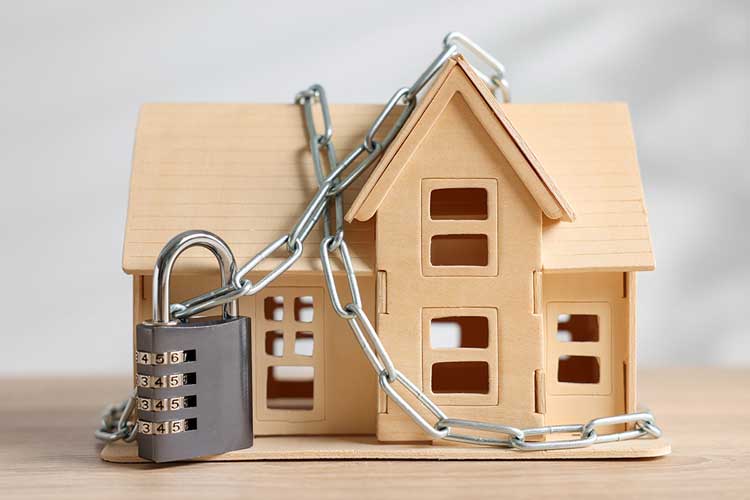
Do you have good deadbolts on all your doors? Strong latches on your windows? Are you diligent about keeping doors and windows locked? Have a barky dog?
If you can answer “yes” to the first three questions, you’re way ahead when it comes to home security (and get extra credit for the dog). Despite what thriller movies might suggest, most burglars enter homes by simply opening unlocked doors or windows—or pushing and kicking locked ones until they open. Very few pick locks or circumvent alarm systems. Intruders prefer empty homes, visual obscurity, silence, easy entry, and quick exits. So, your primary objective when planning home security is to beef up your locks and latches, and maintain good security habits.
While it doesn’t take a genius to steal your stuff, the good news is that the incidence of residential burglaries is fairly slim, and continues to decline: In 2025, only about two out of every 1,000 U.S. homes were broken into, and that rate was 50 percent lower than in 2018, according to the Council on Criminal Justice.
That said, given the financial, physical, and psychological damage that can result from a burglary, it makes sense to do what you can to become more secure.
But because there’s limited evidence that these devices deter crime, before buying anything, read our advice below on how to batten down your hatches and latches, and our article on adopting good security habits. If you decide to hire a pro installer and security monitoring service, we have advice on doing that, too.
Replace Flimsy Locks
Good locks are essential. Click here for our info on various types of locks, how they can be strengthened, and how to find a good locksmith. Spoiler: Good ol’ fashioned deadbolts are far sturdier than electronic and “smart” locks.

Set Up Some Surveillance
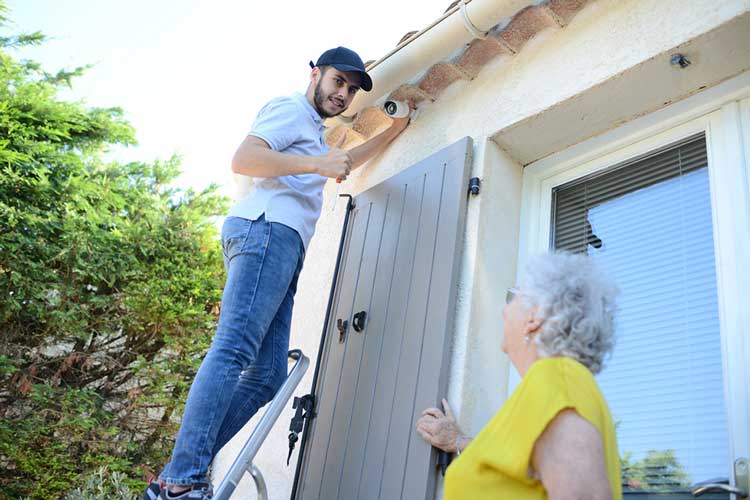
Dozens of device manufacturers and tech companies have entered the home security business. You can buy something as simple as a single doorbell camera or as sophisticated as a full-scale security system that monitors all doors and windows, and scans for movement and heat signatures. You can install these yourself or hire a handyman service.
There’s now so much competition in the home security business that the costs of equipment and monitoring have collapsed. You can buy a doorbell camera for less than $100 and monitor it yourself via smartphone app, or pay as little as $200 a year for a company to monitor it 24/7—without the long-term contracts typical of the home security industry. Click here for our advice on DIY options.
While there’s some evidence that burglars tend to avoid properties if they notice cameras (and other security systems), no one knows whether these gadgets are the reason for lower residential burglary rates, and there’s scant proof that all this surveillance helps police identify and catch criminals.
Beef Up Sliding Glass Doors
The locks on sliding glass doors are notoriously flimsy—many doors can be lifted right off their tracks. If you have one, consider paying a locksmith to evaluate its vulnerability and, if necessary, install reinforcements.
With most models, one door is fixed (screwed or bolted at several points to the track), so you just have to worry about its sliding partner. You can prevent a pry-bar attack with a broomstick placed in the lower track to keep the door from sliding open. Aluminum “Charley Bars” mounted waist-high also work.
If both doors slide, secure them by drilling two 9/32-inch holes where their frames overlap at the top and bottom. Drill through the inside door’s frame and halfway into the outside door’s frame; then insert 1/4-inch bolts in the holes. This will prevent intruders from prying the doors open and make it difficult to lift doors off their tracks.
To prevent burglars from lifting a sliding door off the track, drill vertical holes through the overhead track every 12 inches or so. Drive screws into these holes just far enough so that the doors slide under their heads but can’t be lifted off the track. This won’t work on some hollow frames.
Secure All Windows
There are five common types:
- Double-hung (sash) windows open vertically; sometimes the top half is fixed and sometimes it’s not.
- Horizontal sliders are like small sliding glass doors.
- Casement windows swing outward and are usually opened and closed by a lever attached to a geared hand crank.
- Jalousie windows are a series of panes about four inches wide set in frames interconnected by levers.
- Fixed pane windows do not open.
Secure windows by making them resistant to being pried open. In addition, it should be difficult to unlock and open the window after a pane of glass has been broken.
Quick Fixes
Jalousie windows are the most break-in prone as their panes are easy to remove even when they’re locked. If you have one that can be reached from outside, consider replacing it, adding bars, or equipping it with an alarm.
Casement windows, when closed, often withstand break-ins due to the locks on their frames and their hand crank mechanisms, which resist prying. Still, leave one open a few inches, and someone can reach in and turn the crank to fully open the window. Make that more difficult by removing the handle, or cover the window with bars or an alarm screen.
Because locks on horizontal sliders are often flimsy enough to be snapped, consider auxiliary locks.
Double-hung windows are relatively easy to secure, but many commonly available locks are not effective. A simple way to secure them is to pin the two frames together.
Improve Glazing
You can make windows more secure by mounting impact-resistant glazing films over your existing windows. At considerably greater cost, you can have a pro replace particularly vulnerable windows with the type of materials used in car windshields, which is not difficult to break but is hard to remove.
Install Bars
Protective metal bars, whether decorative or standard prison issue, are the ultimate break-in deterrent. Most are fully welded on a semi-custom basis by local installers. You can buy bar sets ($40-$100) that can be adjusted to fit your windows; they come in several heights and expand up to 42 inches wide. They won’t resist attacks as effectively as fully welded bars, but, properly installed, they’ll discourage all but the most determined intruders. Some hardware stores also stock fully welded window bars, although the selection is limited and may not be suitable for your windows.
Professionally installed, fully welded bars usually cost more than $600 per window.
Don’t Block Escape Routes
Metal bars on windows or doors, or difficult-to-remove locking devices (such as screws in window frames), pose hazards in the event of fire. Most building codes specify that any sleeping room without an exterior door should have an easily opened window. Window bars with hinges on one side and a lock on the other are risky because the keys can easily be misplaced. Hinged bars with an extended mechanical latch release are safer: No one outside can reach the release, but it can be easily operated by someone inside.
If windows are secured with screws, make sure all occupants know that in order to escape through the window they’ll need to knock out the glass, place a blanket or other padding on the bottom frame, and carefully climb out.
Block Other Access Routes
Intruders love unlocked attached garages. If they can get into one, they can close the door and bust into the house unseen and unheard.
Standard twist handle locks on overhead garage doors can be easily defeated. Electric door openers provide more resistance, but because even these may yield to a crowbar, get a backup lock. One simple, inexpensive solution is to drill holes in the track on each side just above the closed door and put U-bolts through the holes. This keeps the door secured only from inside the garage when the door is closed. The door can also be secured from the outside with a hasp and padlock.
In search of hidden entries, many intruders head to utility rooms and enclosed porches. Make them difficult to access and install a solid-core door with reinforced locks between them and the rest of your house.
If someone could conceivably enter your attic from the outside, lock the attic hatch or door. Instead of glass, most skylights are now a thin plastic that is easily broken. Consider shatter-resistant glazing or adding metal bars.
Most window ACs can be removed easily from the outside or by pushing the unit in. The first precaution is to secure the partly raised window frame tight against the AC case by pinning or screwing the frames together. The easiest way to prevent someone pushing or pulling out the unit is to screw a piece of lumber to the top of the windowsill. You can improve the aesthetics by extending the board from one side of the frame to the other and painting it the same color as the sill.
Replace Weak Doors
Hollow wood doors can be easily punched through. Exterior doors should be solid wood or foam-filled metal and fit snugly within door frames, with no more than a 1/16-inch gap on either side.
The most secure doors are heavy-duty steel in a steel frame with a high-security lock. A less costly step down is a metal-bar door installed a few inches outside an existing door. When set into a brick or concrete-block structure, defeating them is generally noisy and time-consuming. The simplest kinds of metal-bar doors, which are usually installed along with bars over the windows, make your place look like a prison. But some fabricators make attractive decorative ones, and a few custom-build them as individual pieces of art.
If you have an outward-opening door, make sure it has hinges with non-removable pins. Hinges should also be installed so that the screws attaching them to the door and frame cannot be accessed when the door is closed.
Click here for more advice on buying and installing doors.
Light It Up
Turning on an outside light will chase away all but the nerviest prowlers. Illuminate the entire exterior of your house or vulnerable areas, either all night or on a motion trigger.
Professional installation of a whole-house security-light system costs $1,000 to $3,000—and increases your electric bill. A do-it-yourself installation at one point of vulnerability may cost less than $500. Unsecured outdoor lights with outdoor sockets (which usually take reflector lamps) cost much less, but a careful intruder can remove the bulbs.
Place the switch for any outdoor light or lighting system intended to provide security in a convenient location away from the light. You won’t want to run downstairs to turn on a light when a prowler is breaking through a nearby door.
Keep Landscaping in Check
Doors and windows hidden by garages, fences, and landscaping help intruders invade sight unseen. If possible, keep areas around your doors and windows visible from the street, to your neighbors and from within your house.
If it’s impractical or unattractive to hack back your jungle, consider planting thorny bushes close to the house to keep prowlers away. Garden centers and landscapers can advise you on what to plant and give you help planting it. Click the following links for ratings of garden centers, landscapers, and landscape designers.
Large trees may provide access to upstairs windows or, more often, to a porch roof near a window. Consider pruning them. We also have ratings of tree care services at Checkbook.org.
Fence It In?
A high fence is a double-edged sword: It can make it more difficult for an intruder to get in and out, but it also can hide a burglar. If you have a gate, keep it locked so an intruder knows the fence would slow escape.