

Last updated June 2026

Consumers’ Checkbook Investigated 40 Brands that Operate Outlet or Factory Stores; We Found Many Offer Lower-Quality Merchandise, Not Legitimate Bargains
The words “outlet mall” or “factory store” make many shoppers envision waaaaaay-marked-down designer bags, slightly damaged furniture or first-quality, last-season fashions at steep discounts. But retail analysts claim that 80 to 85 percent of the goods offered at outlets are specifically made for these off-price stores. “These stores don’t sell seconds or old merchandise; they are mostly channels where you get stuff that is exclusively manufactured for the outlet,” said Gonca Soysal, a marketing professor and retail expert who has studied the topic. “Outlets are very different from what general folks perceive they are.”
Goods made for outlets tend to be both lower-priced and lower-quality than mainline store stock: Synthetic-linen blend sundresses at Banana Republic Factory vs. 100 percent linen frocks at mainline Banana Republic stores; rubber-soled men’s dress shoes at Cole Haan outlets compared to leather-bottomed ones at department stores. “Basically, outlet stores have become just another distribution channel for brands to make lookalike items for less,” said Pamela N. Danziger, a market researcher and author who has reported extensively on outlet malls.
Sleuthing out what big brands like J. Crew and Pottery Barn actually sell at their “factory” locations is further confused by a lack of disclosure. Few companies tell their customers that the merchandise is different. We asked their corporate PR folks for clarity about their brand outlets, and only one of the 40 we emailed got back to us.
To figure out whether outlet stores are all smoke and dressing room mirrors, four of our staffers spent three months visiting outlets, factory stores, and clearance centers representing dozens of big-name brands from Adidas to Zales. We studied price tags and labels, asked managers and salesclerks for clarification about what they were selling, and pawed through racks for insights. We read companies’ online terms-of-service legalese for clues (they revealed little). We also scoured the internet for intel and rumors about who sells what.
What we uncovered was surprising. Many outlets, especially mid-priced clothing and shoe brands, do churn out cheaper merch just for their “discount” locations. Some off-price stores mix made-for-outlet products with clearance items from their original brands. And still other retailers, particularly big-box houseware chains and some high-end designers, operate genuine clearance centers with discounted merchandise that once appeared in regular stores: a floor model Pottery Barn dresser; last season’s Burberry trench coat; a discontinued color of an Athleta workout bra.
Here’s what we dug up, including tricks our team learned to tell if you’re getting a true bargain or just a lower-quality knockoff.
Want to see what we learned after spending hundreds of hours snooping around stores? Click on the brands below to skip to our findings for each.
Adidas American Eagle Ann Taylor Anthropologie Athleta Banana Republic Bloomingdale’s Brooks Brothers Burberry Calvin Klein Carter’s Chico’s Clarks Bostonian Coach Cole Haan DKNY Gap J. Crew Kate Spade Lafayette 148 Le Creuset Levi’s LOFT New Balance Nike Nordstrom Oakley Old Navy Polo Ralph Lauren Pottery Barn Reclectic RH Talbots Theory Tory Burch Under Armour Vans Williams Sonoma Yankee Candle Zales
A Bit of History
The outlet and factory store phenomenon began in the early- and mid-1900s as a boon for both retailers and consumers. Manufacturers of kitchenware, furniture, or L.L. Bean duck boots would run a small store, often near their factory or distribution hub, hawking past-season, overstock, or slightly damaged products at big discounts. These stores were often messy and haphazard since it was hard to predict how many leather belts would sell at retail prices or when factories might spit out too many green socks.
Outlet malls began to crop up in the 1970s and 80s, when giants such as G. H. Bass and Ralph Lauren opened their own outlet stores catering to increasingly deal-mad shoppers.
“The appeal of outlets was that scavenger hunt aspect, the idea that you could buy something for $50 but think that someone else had paid $500 for the same thing,” said Kristin McGrath, a senior editor for bargain-sourcing website The Krazy Coupon Lady. Outlets were usually located at least an hour’s drive from major metropolitan areas, an attempt to keep these bargain boutiques from cannibalizing the customer base willing to pay full price at the local mall.
In the late 20th and early 21st centuries, brands began to dramatically expand their “factory” store footprints, and hundreds of outlet centers opened across the U.S. Around the same time, most major brands began to outsource their manufacturing overseas, which made prices for clothing and other products cheaper—and more plentiful overall. Fast-fashion brands (Zara, Shein, H&M) flooded the market with inexpensive, often poorly made goods.
Brands like Ann Taylor, Gap, and J. Crew, which started off running outlets with past season or overstock merchandise, presumably wanted in on the cheap and cheaper retail rodeo. And their off-price stores became so popular that it was impossible to fill outlets with leftovers or older goods. To keep up, many retailers started manufacturing completely different, lower-quality, lower-priced merchandise for their “outlet” or “factory” locations. The dresses, shoes, and bags looked similar, but corners were and are being cut somewhere: shoddier construction, fewer stylish details, inferior materials.
Why Won’t Brands Reveal What Their Outlets Sell?
“I think companies are subtle about branding and labels for outlets because they don’t want to lose their magic,” Soysal says. “They want customers to think they are buying the same things for much cheaper. But if they say, 'this is a different product,' then that illusion vanishes.”
That’s probably why brands can be so obtuse about their signage, product labels, and logos at outlets. Many outlet stores—Polo Ralph Lauren, Talbots—bear signs with the company name but no mention of outlet, clearance, or factory.
Some outlet stores use different labels and logos on their merchandise, but it’s often an if-you-know-you-know secret. (See the end of this article for tricks our researchers learned for decoding labels.)
For example, Talbots Outlet labels are white and printed with the word “Talbots” with three small dots underneath; regular Talbots items bear a blue-black label with just the word “Talbots.” J. Crew and Banana Republic have similar label coding; other brands like Polo Ralph Lauren and Tory Burch don’t.
Brands focused on handbags and leather goods (Coach, Kate Spade) also differentiate between made-for-outlet goods and mainline stores by using different logos. We speculate that outlet-only Kate Spade bags bear exterior, spade-shaped logos (sometimes over the words “Kate Spade”) while regular store bags are marked with a label simply reading “Kate Spade.” But this branding and labeling seems to change frequently; the logos on Kate Spade outlet bags looked different from visit to visit.
Figuring out the whole made-for-outlet code is needlessly confusing and, we think, deceptive for shoppers. No wonder consumer advocates have filed class action lawsuits against brands including Samsonite, Coach, and Oakley, accusing their outlets of deceptive sales practices by not disclosing made-for-outlet items or advertising fake sales or discounts. Most such cases have been settled out of court.
For instance, a 2023 lawsuit filed in California alleged that J. Crew Factory used false reference pricing. The filing argues that the words “Comparable Value,” which are printed on every price tag, reference a higher price that J. Crew never charged in any of its stores. And because items sold by J. Crew Factory stores were never sold at regular J. Crew stores, its “Comparable Value” claims violate state and federal laws on false reference pricing. The lawsuit also claimed that J. Crew Factory “products are not comparable to JC clothing because JC clothing is of a higher quality.”
Another hint that the stuff you’re pawing through at outlets may never have been on the floor at a mainline location at your local mall? Many brands now operate more off-price stores than regular-price ones. For instance, there are 96 Ann Taylor stores—but 122 Ann Taylor Factory stores—across the U.S., and just 93 Nordstrom department stores compared to 269 Nordstrom Racks.

What We Learned from Our Outlet Sleuthing
We found that outlet centers and stores are puzzling places employing myriad tricks to convince shoppers they’re getting bargains when they often aren’t. At the end of this article we provide descriptions of what each of 40 popular brands offer at their outlet/factory stores.
We found that outlets and factory stores fall roughly into three categories, plus one interesting outlier.
Stores Selling Only (or Mostly) Made-for-Outlet Goods
About half the brands we studied operate outlet or factory stores that resemble your regular mall favorites, but actually carry only, or mostly, different stuff that’s more cheaply made and therefore priced lower. Some, but not all, use interior clothing labels that subtly indicate items are made for outlets. For example, J. Crew Factory labels bear the words “J. Crew” with two small diamonds underneath; regular J. Crew labels simply read “J. Crew.”
Yes, prices at outlet stores are usually lower than those at mainline stores for similar items (black workout tights, men’s linen blazers), but even a casual glance at a fabric composition label or a look at the stitching on a bag reveals significant differences. The manufactured-for-outlet goods frequently bear price tags using the words “comparable value” or “MSRP” price and then listing a lower “bargain” price.
But those suggested prices are for completely different, probably higher-quality merchandise made for the mainline stores. So it’s like comparing apples to apple fruit leather. These simply aren’t the same items.
For example, consider a spring women’s shirtdress sold by regular Banana Republic stores. At the time of this writing, it was offered in several solid and striped styles in 100 percent cotton for $198. The frocks had full skirts and details like removable belts and big collars.
The same day, Banana Republic Factory’s website had a striped shirtdress for $75, with a “compare at” price of $140—and it was running a sale that provided an additional 20 percent off at checkout. A bargain, right? Well, until you realize the Factory dress is made of less fabric—in a synthetic blend—than the full-skirted mainline frock. It’s not that the cheaper outlet dress is inherently bad, but it was a completely different garment than the mainline one, explaining the far lower price.
Outlet Stores Selling Mainly Discounted Original-Store Goods
Home décor stores and some high-end designers (Burberry, Lafayette 148) run what we think are just clearance centers. At home outlets for brands like RH and Pottery Barn, that means floor-model sofas, tables, and mirrors (sometimes slightly or very damaged).
Similarly, some high-end designer clothing outlets offer past-season or overstock goods at big discounts—take a Burberry women’s button-down shirt with an original cost of $700 which ran $250 at the outlet. “The higher on the status pole a brand is, the more likely you are to find a bargain,” Danziger said. “But these are bargains off of the regular price—not what many people would consider good deals.”
There aren’t nearly as many of these high-end true outlets as there are factory stores (selling made-for-outlet goods) operated by many apparel brands. So while there are more than 300 J. Crew Factory locations, there’s only one L.L. Bean clearance center, and only about 30 Nike Clearance stores around the U.S.
To make things more confusing, a few brands operate two types of off-price stores: For example, Talbots and Chico’s operate some locations that sell only made-for-outlet goods, but also run separate clearance centers that sell overstock (“redline”) items. For the latter, the word “clearance” still means legit bargains.
Selling Their Usual Stuff, Just in Outlet Centers
Some stores at outlet malls don’t offer special prices at all. We found several brands—Le Creuset, DKNY, and a few others—operate brick-and-mortar stores only at outlet centers. Other retailers—Sephora, Bath & Body Works—simply have branches in outlet malls, presumably to catch shoppers wherever they are.
An Interesting Outlier
URBN is the Pennsylvania-based company behind women’s fashion brands Anthropologie, Free People, and Urban Outfitters, plus the women’s clothing-rental juggernaut Nuuly. It runs six “Reclectic” outlets across the U.S., which it describes as “a unique retail experience from URBN, a global portfolio of lifestyle brands including Anthropologie, Free People, Urban Outfitters, and Nuuly. From treasure hunters to thrifters, everyone can find something they love at Reclectic.”
That “thrifters” word is telling, since many of the garments and accessories you’ll spot on the floor at Reclectic’s warehouse-like stores are “retired” items that have been rented out via Nuuly. Prices are low (party frocks for $20, retail prices of $150 and up). But even though the Nuuly merch appears to have been cleaned, you’re essentially getting clothing that’s either so worn or so out of style that it is no longer rentable. Other items appear to be steeply discounted, unsold stuff from Anthro or Urban Outfitters (for example, that ruffled purple cropped sweater no one bought last winter is now even further marked down).
Still, it’s a fascinating model and at least keeps clothing out of landfills for a bit longer.

Tips for Shopping Outlets
Do some outlets still offer deals? Sometimes. Here are some tips on how to save.
Consider Buying Used Instead
Dying for a Coach purse or a J. Crew jacket? Think about purchasing it secondhand at a local consignment store or online via ThredUp, Poshmark, TheRealReal, eBay, etc. If you know how to look for the mainline brand label or logo, you can probably land a high-quality item for less money. Click here for more info on clothing resale options.
Try to Time Purchases for When Real Deals Are Offered
“If you want a certain style, bookmark it on the brand’s main website and wait to see if it gets marked down to final sale,” said Jeanel Alvarado, founder, CEO, and editor-in-chief of Retailboss, a website covering the retail industry. You aren’t landing a better “deal” or saving money if the purse, suit, or T-shirt was made for the outlet—you’re just getting a cheaper thing.
Unfortunately, the only way to know whether a discount is a true discount is to track prices for a while. And remember that most retailers now manipulate customers by running continuous sales.
Know Which Stores Offer Only Made-for-Outlet Merchandise
We’ve made a list of big stores that only (or mostly) stock made-for-outlet items. If you shop at them, you’re getting a completely different product than you’ll find at department stores or mainline shops. “A brand you know at full price might have a certain standard of quality that isn’t the same at the outlet,” Danziger said.
Don’t Believe Tags with “Compare at” or “MSRP”
These are outlet and off-price marketing tricks and don’t mean anything. If an item came from an original store or maker, it’ll usually have a price tag reflecting that (i.e. a mainline Nordstrom tag), sometimes with little low-tech stickers planted over original prices.
Know Your Brand
Whether you’re bargain hunting for last-season or overstock stuff at a clearance center or thrift store, get familiar with the mainline brand’s styling, fabrication, construction, and quality. This can also help you separate made-for-outlet junk from better-made original items: For instance, the ballet flats we spotted at the Tory Burch outlet have plastic soles and retail for around $120; mainline Tory ballerinas cost $200 or more and usually sport leather soles.
Learn to Identify Quality
Sometimes you can purchase a just-fine item that’s made for the outlet. But for these and other purchases, learn about the hallmarks of quality.
For garments, look for lining on tailored pieces such as jackets and pants; double or well-reinforced single seams, and natural fabrics like linen, cotton, silk or wool. Beware of cheaper synthetic blends which often signal lower quality and durability.
For shoes, watch out for synthetic leather or rubber soles on dressy pairs (real leather can be re-soled, so therefore can last longer), lousy stitching, or simply uncomfortable styles.
For bags, know that bonded leather is more cheaply produced and less long-lasting than 100 percent leather. Check that zippers and buckles function and that stitching is uniform.
At Stores Offering Real Deals, Expect Chaos, Limited Sizing, Restrictive Return Policies, and (Maybe) Slightly Damaged Goods
True outlets (aka clearance centers) are a mixed bag, stocking things people didn’t buy at regular price in regular stores, floor model furniture, and, in the case of Anthropologie/Free People’s Reclectic outlets, used rental garments. Part of the reason off-price stores started producing made-for-outlet goods was that consumers got tired of this treasure hunt, catch-as-catch-can process.
Compare Prices
Check prices of similar items currently for sale at the mainline store. If Banana Republic’s regular store is running 40 percent off, you’ll probably net a nicer sweater or shirt there than if you buy the made-for-outlet version.
Similarly, when shopping outlet or factory stores for Nike, Polo Ralph Lauren, New Balance, and other brands that also sell stuff in department stores, on Amazon, etc., compare what you’ll pay in the brand-operated stores with what you’d pay elsewhere. Our researchers often dug up better deals by buying online, not from outlets.
Check for Coupons
Outlet malls and stores often have discount coupons, usually digital but occasionally old-school paper.
The Ins and Outs of Outlets
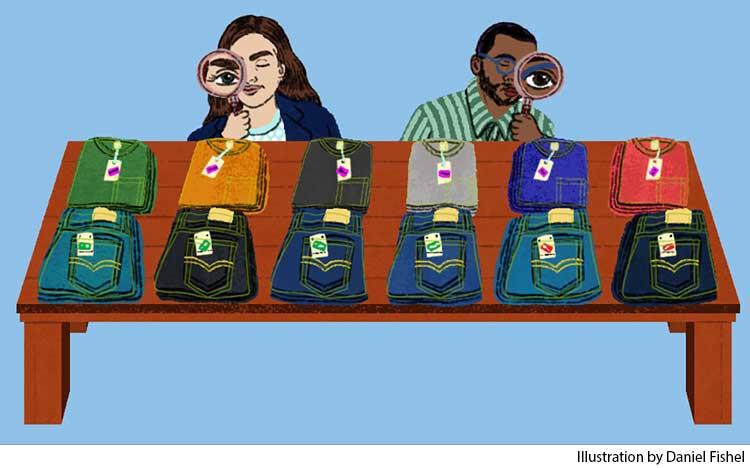
Consumers’ Checkbook staffers spent three months evaluating outlet stores operated by 40 major brands to determine which merchandise is overstock or clearance from regular stores—and what stuff is simply cheaper goods manufactured for the outlets. We scrutinized the companies’ online disclosure statements, requested info from corporate PR reps, and spent hundreds of hours snooping around stores. Here are our tips and tricks for spotting legitimate deals and avoiding retailers’ dishonest outlet sales traps.
Athletic Shoes, Apparel & Sporting Goods
Adidas
The athletic footwear and clothing juggernaut operates 100-plus factory stores across the U.S.—although those located in outlet centers simply bear “Adidas” signs. Store staff told our researchers that Adidas doesn’t make merchandise specifically for its outlet stores. This means prices at stores in outlet centers might be the same as those at standard stores—and we often found lower prices by checking websites like Amazon or Dick’s. At one Adidas outlet, we figured out that items bearing old-school, price-tag stickers meant legit steep markdowns—for example, pairs of cleats selling for less than half of what our soccer moms and dads paid several months earlier. Verdict: Mix of full-price mainline store goods and mainline store remainders/clearance
Athleta Factory Outlet
Unlike its corporate cousins Banana Republic, Gap, and Old Navy, this women’s and girl’s athletic clothing brand operates only five “factory” locations, in Aurora, Ill., Camarillo, Calif., Cypress, Tex., Deer Park, N.Y., and Leesburg, Va. Managers at the Athleta Factory Outlet in Virginia and our own snooping confirmed these are regular Athleta stores crossed with clearance centers. Sweaty Bettys can purchase current-season pieces at regular prices but also find marked-down past-season goods. The redlined clearance items (look for old-school price stickers) often list savings of more than 50 percent. Our staffer snagged an entire yoga outfit (tights, top, bra) for $53, which would run $200 or more at full price. These are true remainders, though, meaning you might not find that cardinal red sweatshirt in your size. But if you’re flexible on color and style and willing to hunt, there are great deals here. Verdict: Mix of full-price mainline store goods and mainline store remainders/clearance
New Balance Factory Store
Staffers at one Virginia “factory store” for this athletic shoe brand said outlet merch is largely the same as kicks stocked in regular stores. Clearance racks at the back of the store had single styles of shoes at steep markdowns; otherwise, the factory location seemed to carry lower-priced styles and unsold items from mainline stores. We often found we could buy items cheaper elsewhere by doing a quick online search. Verdict: Mix of full-price mainline store goods and some mainline store remainders/clearance. Note: NB also separately operates “Joe’s New Balance Outlet,” an online-only outlet selling only steeply discounted, leftover stock.
Nike Clearance Store, Nike Unite, and Nike Factory Store
In addition to its flagship mainline locations, the shoe, apparel, and sporting goods giant operates three different types of off-price stores.
At a Nike Clearance Store, staffers told us all stock is unsold merchandise from mainline stores. “That’s why we have so many hoodies right now,” one salesperson said when we visited in early spring. We found Nike Tech sweatshirts for $25 each (normally $100+) and merch tagged with manual stickers showing the date each item arrived or date of latest markdown. Because all items at these locations are overstock, you’ll find a somewhat random and rotating selection. Another signal that Nike Clearance locations are deal-finding dumping grounds: Signs on every rack remind shoppers that all sales are final, no returns allowed. Verdict: Mainline store remainders/clearance only
A manager at a Nike Unite store in Maryland told us the inventory is a mix of made-for-outlet goods, clearance from regular stores, and older styles or color combos from regular stores. Nike Unite stores are known for a back wall with clearance kicks from mainline stores; at the store we visited, we found major markdowns on current styles (i.e. kid sneakers in a current design that normally run $70 were offered for $20, and plentiful selection of LeBrons and Air Jordans at lower-than-usual prices). But compared to Nike Clearance stores, selection was limited for true steals. Verdict: Mix of made-for-outlet goods and mainline store remainders/clearance
The Nike Factory Store we dropped by was confusing, with employees who couldn’t tell us much about the offerings and a clearance wall at the back of the store. For stuff sold in regular displays, we found that doing a quick internet search often netted us lower prices elsewhere. Nike was the only brand that replied to our emails asking for outlet clarification. Its PR team said: “For many of our consumers, our factory stores—also known as Nike Value Stores—serve as an entry point to the Nike brand, offering the same style and technology in shoes, apparel, and sports equipment that are offered in our in-line stores.” Verdict: Mix of full-price mainline store goods and made-for-outlet goods, and some mainline store remainders/clearance
Under Armour Outlet
The customers for this Maryland-based workout clothing brand probably hydrate, hustle, and have at least one gym membership. The manager at the outlet store we visited said his store’s shorts, T-shirts, sneakers, and hoodies were mostly made-for-outlet items, but that items on clearance racks were regular-store styles and returns, sold at steep discounts. Unfortunately, regular and made-for-outlet items bear the same labels, so don’t break a sweat trying to figure out the difference. Verdict: Made-for-outlet goods and some mainline store remainders/clearance
Vans
Slip into the outlet locations of this all-American skate shoe and sportswear brand to find discounts on last season’s sneakers and other footwear. But staff informed us that the T-shirts, socks, and other merch is made-for-outlet only. Vans sneakers in discontinued styles and colors were sold on a “buy one, get one 70 percent off” promo. Verdict: Clothing is made-for-outlet only; shoes are mostly mainline store remainders/clearance
Men’s, Women’s & Children’s Clothing
American Eagle
At a Maryland outlet for this casual wear brand, a manager said their store stocks some made-for-outlet stuff as well as many of the same styles as mainline stores. Tags for mainline and made-for-outlet items are identical; there’s no way to tell which pieces are which. Sometimes outlets receive clearance items from mainline stores, too. Shoppers can return any AE merchandise—outlet or mainline—to outlets or regular stores, a unique perk. Verdict: Mix of full-price mainline store goods, made-for-outlet goods, and mainline store remainders/clearance
Ann Taylor Factory Store
Clutch your pearls: Ann Taylor, a longtime stalwart for quality women’s office and evening wear, now operates 120-plus factory stores across the U.S.— and only 96 regular retail shops. Factory locations sell a completely different line of clothes and accessories from regular Ann Taylor stores. You can spot made-for-outlet items by looking at labels—they say “Ann Taylor Factory.” The manager at the suburban Maryland outlet we visited explained that these stores strive to deliver the classic Ann Taylor style at lower price points. We noticed clothing and shoes that seemed less chic and materials that were less luxe than what we found at mainline AT locations. The factory store we dropped by also had a huge, well-organized clearance section, but all those items were also factory-store-only merch. Verdict: Made-for-outlet goods only
Banana Republic Factory
Both store personnel and our in-person research verified that Banana Republic Factory stores sell only made-for-outlet merch. You can distinguish factory stuff from mainline by looking at interior labels; those that bear three small diamonds under the words “Banana Republic” signify made-for-outlet goods. Banana Republic Factory also has a dedicated online store. Do BR’s factory stores offer a bargain safari for shoppers? We don’t think so. Made-for-outlet items have lower prices than mainline store merch, but we spotted differences in quality of materials: Cheaper zippers, higher blend of synthetic fabrics instead of cotton or wool, and slightly simpler styling. For instance, we found a men’s tan, unlined linen-cotton suit jacket on the Banana Republic Factory website for $140; the same day, a similar-looking but partially lined linen-cotton blazer on regular Banana Republic’s site cost $350. Verdict: Made-for-outlet goods only
Brooks Brothers
Around since 1818, this men’s and women’s clothing company has outfitted presidents, famous authors (F. Scott Fitzgerald), and business leaders in preppy, mid- to high-level suiting, dresses, ties, and more for generations. Its many outlets just bear “Brooks Brothers” signs, but the website for Simon Outlets (where many BB outlets live) and staffers say most of the outlet stock is made specifically for the off-price stores. On our visit, we estimated a mix of about 80 percent made-for-outlet items and 20 percent mainline remainders, the latter often at steep discounts. We did crack the code on how to tell what’s what: A “27” in the upper left corner of a garment’s price tag signifies it’s a lesser-quality, made-for-outlet item; a “26” in the same spot means it’s mainline. Other tells: Merch bearing “Established 1818” tags come from the regular store, while outlet items have an “1818” label. Verdict: Mostly made-for-outlet goods, with some mainline store remainders/clearance
Burberry
At its outlet shops, luxury customers mad for Burberry’s pricey-but-well-made trench coats or signature plaid shirts, dresses, and bags can turn up past season and overstock men’s and women’s goods from the since-1856 British brand. Outlet store managers told us that none of the inventory is made specifically for off-price stores. On a recent visit, a women’s plaid button-down with a $700 original price was marked down to $500 and then discounted again, to $250. Our take? This plush, status-y stuff is still expensive, but if you’ve always wanted a Burberry item, here’s where you’ll find deals. Verdict: Mainline store remainders/clearance only
Calvin Klein
The brand known for underwear, perfume, and streamlined sportswear was sold by its mold-breaking namesake founder more than 20 years ago. Its regular, mid-priced merchandise is still on department store racks, but staffers at Calvin Klein outlet stores claim their locations stock only made-for-outlet men’s and women’s clothing, underwear, and accessories. Comparing labels didn’t provide us any clues as to what’s what. Verdict: Made-for-outlet goods only
Carter’s
While Carter’s does operate seven clearance stores in the U.S., most outlet-center locations (unless specifically labeled “Carter’s Clearance”) sell the same baby, kids, and tween clothing and accessories that you’ll find at the mall. (This includes adorable OshKosh B’gosh baby-sized overalls and toddler jeans.) We dropped by a North Carolina outlet store and spot-checked several items and found the same pricing, including that week’s sale prices, at Carters.com—so don’t expect savings by schlepping to an outlet. But the N.C. store did have a large clearance section, where kid’s footie PJs were $10 in-store, versus $12 online. Carter’s Clearance stores, true dumping-grounds-with-deals, are located in Lakewood, Calif., Lombard, Ill., Napa, Calif., North Olmstead, Ohio, Orlando, Fla., Springfield, Va., and Tempe, Ariz. Verdict for regular outlet stores: Mostly full-price mainline goods
Chico’s Outlet, Chico’s Off the Rack, Chico’s Clearance Center
The size-inclusive (XS-XXL) mid-priced women’s clothing maker runs Chico’s Outlet stores (in outlet centers) and Chico’s Off the Rack (outlet stores in non-outlet-mall settings), plus a handful of Chico’s Clearance Centers. We found that Chico’s Outlet and Chico’s Off the Rack locations sell mostly made-for-outlet items, with a smattering of clearance items from regular Chico’s. Tellingly, you can’t return outlet merchandise to regular stores and vice versa. Although Chico’s off-price stores use the same labels as its regular stores, you can spot differences by focusing on names for standard styles; they’re different between outlets and the regular Chico’s—for example, slim pants are called “Josie” at the outlets and “Brigitte” at the regular store. Chico’s Clearance Centers, on the other hand, are true depositories of past-season mainline store items. Verdict: Chico’s Outlet/Off the Rack sell mostly made-for-outlet goods; Chico’s Clearance Centers sell mainline store remainders/clearance only
DKNY
DKNY stands for “Donna Karan New York,” a “diffusion” (aka cheaper) line founded by legendary Manhattan women’s designer Donna Karan. Today, Karan no longer owns any of her brands, and DKNY sells mid-priced women’s and men’s underwear, jeans, and accessories at stores like Macy’s and at a dozen company-run stores in U.S. outlet malls. Staff at the Virginia DKNY outlet center we visited said there was no difference between their merchandise and the DKNY stuff at Macy’s or Nordstrom. Most racks and shelves had “50 percent off” signs on them, but you’ll find similar (and nearly continuous) sales at department stores; shop around to get the best price. Verdict: Full-price mainline goods and some mainline discounted goods
Gap Factory
The signs outside of the hundreds of Gap Factory locations bear that exact moniker. After some digging, we found that the company website states: “Is Gap Factory the same as Gap? Our in-house design team creates an exclusive line of casual-chic styles available only at Factory. We do not sell Gap overstock, last season’s trends, or flawed product.” This means that Gap Factory shoppers get lower-priced, possibly more cheaply made versions of the men’s, women’s, and kid’s sportswear found at regular Gap stores. (E.g. a women’s tan barn jacket for $50 at Factory, a similar jacket with more buttons and tailoring at regular Gap for $148.) There’s chatter online about comparing the clothing labels Gap uses for mainline vs. made-for-outlet stuff, but our inspections found labels for factory and regular stores read simply “Gap.” Verdict: Made-for-outlet goods only
J. Crew Factory
The preppy-meets-cool outfitter for men, women, and kids—around since the 1980s—operates a whopping 330 J. Crew Factory locations, compared to 100 mainline stores. It also runs a separate J. Crew Factory website. But button-down bargain hunters won’t find any discounted regular-store Crew styles at Factory stores; they sell only made-for-outlet goods. You can distinguish mainline items from made-for-factory by looking at labels: Two diamonds underneath the words “J. Crew” mean it’s outlet. A Crewcuts line for kids also gets the outlet-only-stuff treatment at Factory locations. Verdict: Made-for-outlet goods only
Lafayette 148 Company Outlet
There are just a few U.S. outlets (six at the time of this writing) for this high-end women’s business-and-occasion clothing brand. Such scarcity can be a sign that shoppers are getting overstock or clearance goods from the regular stores. In this case, staffers at the Tanger National Harbor store in Maryland said all the merch was past season (Lafayette 148’s website calls it “archival”), and we found sweaters and dresses from what seemed to be recent seasons for 60 percent off. Verdict: Mainline store remainders/clearance only
Levi’s
Got the blues about the high price of jeans? Though there’s online chatter about how to spot made-for-outlet price tags and SKU numbers at Levi’s outlet stores, we couldn’t verify anything. But staffers at an outlet store we visited said all the denim items (jackets, pants, et al.) were made-for-outlet. Our researcher thought that the denim at the outlet store felt thinner than our regular 501s, with skinnier prices, too— $75 for most jeans, versus $109 for comparable items at regular Levi’s stores and its website (which regularly runs 30-percent-off sales, so consider that before buying what might be lesser quality outlet wares). Verdict: Made-for-outlet goods only
LOFT Outlet
Like Ann Taylor Factory Store (LOFT’s corporate sister), LOFT womenswear outlets sell only clothes and accessories created especially for them. We poked around on Ann Taylor’s website and eventually found this description: “LOFT Outlet pieces are created specifically for outlet locations and may not be available online or in standard stores.” You can spot what’s what by looking at labels and tags: They read “LOFT outlet.” Verdict: Made-for-outlet goods only
Holy three-for-$20 T-shirts! We suspected this already budget-level apparel line couldn’t operate outlet stores that sell even-more-disposable clothing, and it likely doesn’t. A manager told us that Old Navy Outlet stores share 80 percent of their inventory with the mainline stores. (Another clue: Regular Old Navy merch can be returned to outlets and vice versa, which is verboten at corporate cousins Banana Republic and Gap). The manager also revealed the other 20 percent of outlet-only merchandise mostly bears large Old Navy logos, which are popular with international tourists. Also outlet-only: Disney-licensed merchandise to outfit the family for less before your theme-park adventure. But there are no special price tags that helped us discern made-for-outlet merch. Verdict: Mainline store goods at regular prices and some made-for-outlet goods
Polo Ralph Lauren Factory Store
The iconic American chain operates 155 factory stores as of this writing, and they carry much of the same merchandise as what we found at the company’s mainline stores and department stores. At factory stores we spied everything from classic horse-embroidered button-downs and piqué polo shirts to iconic Polo Bear and American flag sweaters. A store manager told us there are subtle differences between regular merch and things made for the outlet. For example, a leather detail on mainline cable-knit sweaters is missing from the outlet counterpart. But we didn’t spot any special price tags or interior labels alerting shoppers to outlet-only merchandise. Prices tend to be lower at the factory stores, especially on clearance racks, but everything’s still expensive for what you get (i.e. an American flag sweater was $268 at the outlet and $398 from regular Ralph Lauren; other than price, we couldn’t spot any differences between the two). Polo doesn’t have an online platform for outlet shopping, so you’ll have to schlep in to stock up. Verdict: Mix of mainline store goods, sometimes at lower prices, and made-for-outlet goods
Reclectic
Its website says “Reclectic is a unique retail experience from URBN, a global portfolio of lifestyle brands including Anthropologie, Free People, Urban Outfitters, and Nuuly. From treasure hunters to thrifters, everyone can find something they love at Reclectic.” This is a newish outlet concept from the Philly-based conglomerate behind that trio of women’s clothing brands and the rental service Nuuly (which lets fashionistas hire out garments from all three brands). Reclectic’s six U.S. locations (Charlotte, Chicago, Dallas, New York City, Philadelphia, and Tempe, Ariz.) carry women’s remaindered clothing, shoes, and other accessories from all four brands. This includes “retired” styles from Nuuly, meaning that $20 party dress may have been to multiple weddings and have the minor stains and snags to show it. But for thrill-of-the-hunt types, the mash up of both “gently” used and heavily discounted new merch could be fun to rifle through. Warning: There are no dressing rooms, so wear leggings and a tank top if you think you’ll be trying on stuff. Verdict: Mainline store remainders/clearance and “retired” items from clothing rental service
Talbots Outlet and Talbots Clearance Center
“Almost everything here is made for the outlet, hon,” said the woman manning the cash register at the Talbots Outlet we visited. How to spot made-for-outlet, conservative-but-cute women’s dresses and separates? Talbots Outlet labels bear three dots under the word “Talbots.” And outlet labels are white, while mainline store labels are blue-black. We did find some regular-store clearance items on clearly marked racks; when we visited, a sign read “$25 button-downs; 2 for $40 sweaters, $40 jackets and outerwear.” That meant a Jackie Kennedy-ish spring tweed blazer cost just $40 (original price $200), but sizing was limited.
Talbots also operates a handful of Talbots Clearance Centers (in Albany, N.Y., Baltimore, Meyerland, Tex., and Springfield, Va.). Clearance Centers star past season and marked-down merchandise from mainline locations. We spotted good deals (a $150 linen sundress for $20) and the store was well organized. Sizing availability can vary, with popular mid-range sizes (6-10) in shorter supply than petites and plus sizes. Verdict: Talbots Outlet: Mostly made-for-outlet goods with some mainline store remainders/clearance; Talbots Clearance Center: Mainline store remainders/clearance only
Theory Outlet
This high-end women’s and men’s clothing brand (founded in 1997 by designer Elie Tahari and former Calvin Klein executive Andrew Rosen) says it delivers “timeless essentials” featuring “materials from the best mills in the world.” Store staff told us the styles and the quality are a mix of made-for-outlet items and mainline stock (we noticed soft, thick cashmere and sturdy cotton T-shirts). Pricing at outlets tends to be lower than at standard stores, though $495 for a women’s crepe blazer may still seem steep for many. Unfortunately, we couldn’t find a way to denote outlet-only merchandise. Verdict: Mix of made-for-outlet goods and mainline store remainders/clearance
Department Stores
Bloomingdale’s The Outlet Store
The off-price arm of the Big Apple-based department store was a big disappointment when we scoped out its Northern Virginia branch (there are 21 Bloomie’s outlets in the U.S.). During a few different visits, we found racks and racks of brands we’d never heard of (and found scant mention of them online) plus a few items from Calvin Klein and AQUA (a Bloomie’s house brand). A couple of sad, stray pairs of men’s and women’s designer shoes were displayed next to “Direct from Bloomingdale’s” signs. Maybe we hit the location on bad stock days, but it was puzzling since Bloomingdale’s is experiencing a boom as Saks and Neiman Marcus crash. Verdict: Mostly made-for-outlet goods with a small selection of mainline store remainders/clearance
Nordstrom Rack
Launched in 1973 in the basement of the O.G. downtown Seattle Nordstrom department store, the Rack now has 300-plus locations across the U.S. (compared to just 93 regular Nordstroms!). We dug up a 2023 company press release stating that many items are made-for-outlet: “The Rack carries merchandise from Nordstrom stores and Nordstrom.com, as well as specially purchased items from many of the top brands sold at Nordstrom.” Numerous lunchtime missions to a Rack (located a few blocks from Checkbook’s downtown D.C. H.Q.) turned up both what we suspect are made-for-Rack items and overstock or past season “real” Nordstrom goods. The mix is probably 50-50. An example of made-for-outlet merch: Workout leggings from Z by Zella, a Rack-only offshoot of the OG’s Zella line. Simple ankle-length black tights by Zella are $79; Z by Zella dupes are $25. Also watch for ghost or zombie brands like Max Studio and Adrianna Papell that seem to only show up at off-price stores like Rack and TJ Maxx. Items that are probably from mainline Nordstrom? Billy Reid men’s polos for $75 ($250 list price), Ulla Johnson women’s peasant blouses for $99 ($350 list price). Verdict: Mix of made-for-outlet goods and mainline store remainders/clearance

Home & Kitchen
Anthropologie Home Outlet & Discount Furniture
Anthropologie, the bohemian-cool clothing and décor chain based in Philadelphia, operates clearance stores in Pittsburgh and near Phoenix. These jumbo warehouses offer past-season goods, floor-model furniture, and returned merchandise. The selection varies widely and items sometimes are damaged (e.g., somewhat scratched dining tables, mirrors with slightly cracked frames). But deals can be found, like a lacquered wood and glass bar cabinet originally priced at $2,500 could be ours for $350. Verdict: Mainline store remainders/clearance, floor models, and returns
Le Creuset Outlet Store
Oui, many of the pots from this French cookware giant are still made at its original foundry in its motherland. Most of the 90 Le Creuset-run stores in the U.S. are located in outlet centers (you can also buy online and from department stores). But it’s hard to tell—and the company wouldn’t verify—if Le Creuset locations in outlet centers are true outlets or just regular retail shops. Either way, we did find Le Creuset’s signature red 15.5 qt. Oval Dutch oven for $741 at a North Carolina outlet location, marked down from $780, plus an additional 25 percent off, for a final price of $555.75. Online at lecreuset.com, the same cooker was $780. Other products (pie pans, cookware coasters, pans) and different colors stocked by the outlet were marked down at varying percentages, but not online. Verdict: Mainline goods, sometimes with lower-than-usual prices
Pottery Barn Outlet
According to the website for Simon Premium Outlets, where most of this home-furnishings behemoth’s outlets are located, PB outlets “sell first quality discontinued, overproduced, and returned merchandise.” Salespeople at the Pottery Barn Outlet near Washington, D.C., told us their store carried a mix of online returns, floor models, and past-season items from PB and sister brands West Elm, Pottery Barn Kids, PB Teen, and, occasionally, Williams Sonoma. We saw past-season napkins and pillows for 50 percent off and “open box” (a.k.a. purchased and returned) light fixtures for 75 percent off. Verdict: Mainline store remainders/clearance, floor models, and returns
RH Outlet
From doorstop-like catalogs to sectionals large enough to seat a baseball team, there’s nothing small produced by high-end furniture and housewares company RH (the brand formerly known as Restoration Hardware). Its 40 or so outlets fill ginormous, no-frills spaces with similarly jumbo furniture, rugs, and accessories. Staffers told us nothing was made for the outlet; the stock is all floor models, overstock, or returns. Expect a sea of white sofas (the most common non-shade for floor models); some will have minor stains or wear. We also unearthed items such as scratched wooden dressers for 80 percent off, and stacks and stacks of identical navy-and-white patterned throw pillows. Verdict: Mainline store remainders/clearance, floor models, and returns
Yankee Candle
There’s a flicker of hope for deals inside the outlets for the largest candle seller in the U.S. Employees claimed their inventory consisted of discontinued, damaged, or returned goods. They said nothing is manufactured specifically for the outlet; stores also stock some regularly priced merchandise. The store was offering a buy-one, get-one 50 percent off promotion; a quick search revealed the same deal on its website and at its regular stores. Verdict: Mainline store goods only, often with pricing identical to regular stores
Williams Sonoma Outlet
The high-end kitchenware and tabletop brand operated only four U.S. outlet center stores at the time of this writing, in Birch Run, Mich., Dawsonville, Ga., Leesburg, Va., and San Marcos, Tex. A manager said merchandise was all overstock or past-season from regular stores or the WS website. We found good deals on items like a seashell-shaped porcelain serving bowl for $60 (once $120) and blue spatterware dinner plates (sets of four were $40). Verdict: Mainline store remainders/clearance only

Shoes, Bags & Accessories
Clarks Bostonian Outlet and Clarks Outlet
This shoe-selling brand’s outlets are a puzzle. The comfort (Clarks) and corporate (Bostonian) footwear are sold via the company’s own website, regular mall stores, and at some other shoe shops. The outlet store we visited had a hodgepodge of footwear organized by shoe size, not style. Are the items made for outlet or regular mainline stuff? We have no idea, and store staff didn’t know, either. Anyway, we’re not sure you’re always getting a deal here; we Googled several items Clarks’ outlet stores and often found lower prices at department stores. Clarks’ outlets do offer a two-pairs-for-$109 deal, which might net you deals if you buy several expensive models. Verdict: Likely mainline store goods, but we really don’t know
Coach Outlet
The handbag and leather goods giant operates hundreds of U.S. outlet stores. Corporate HQ didn’t respond to our request for clarification about the differences between regular Coach stores and outlets, but outlet employees revealed that their off-price locations feature made-for-outlet goods, overstock, and past-season items from retail Coach stores. How to spot the diff? Made-for-outlet stock bears a raised “COACH” logo with a horse and carriage above it; mainline store items are stamped simply with the word “COACH,” or bear an oversized “C” bag clasp. Another tell: Some original retail items have a bullseye stamp inside. Verdict: Mix of made-for-outlet goods and mainline store remainders/clearance
Cole Haan
Comfortable men’s and women’s shoes are the focus of this long-running U.S. brand. It operates numerous outlets with “a completely separate line from regular stores,” said a salesperson at a Virginia outpost. He also explained that a few mainline kicks sometimes show up on the clearance rack at the back of the store. How to tell if something is regular Cole Haan, and not a cheaper outlet knockoff? For the former, “Just look for the orange tags,” he said—but there weren’t many on the day we visited. Verdict: Made-for-outlet goods and a tiny selection of mainline store remainders/clearance
Kate Spade
When is a Spade a Spade? Outlet stores for the ladylike clothing and accessories stalwart usually carry only bags and small leather goods—and much of what you’ll find is lesser-quality made-for-outlet merch. How to tell the difference between made-for-outlet and regular store overstock? Outlet-only stock bears a spade-shaped logo over the words “Kate Spade”; mainline store stuff is marked with a rectangular label that reads simply “Kate Spade.” Made-for-outlet bags also bear price tags listing a “comparable value.” Verdict: Mix of made-for-outlet goods and mainline store remainders/clearance
Oakley Vault
The sporty sunglasses and clothing brand operates Vault stores in outlet centers and regular Oakley stores in malls. The shades at the Vault we visited seemed to be the same ones stocked at regular stores, with identical pricing. When we shopped around, we sometimes turned up lower prices online from other retailers. For non-eyewear, staffers told us some clothing items are made for the outlet, but we couldn’t figure out which ones. When we looked up dozens of shirt styles online we found them offered by other retailers, often for less than prices at Oakley Vault. Verdict: Mostly full-price mainline store goods and (likely) some made-for-outlet goods that are also available from other sellers
Tory Burch Outlet
Popular with women from yoga moms to NYC fashionistas, Tory Burch splashes her trademark back-to-back “T” logos on a made-for-outlet line of bags, shoes, and belts, according to store staffers. The tags and labels for outlet and mainline stores are identical, but outlet salespeople pointed us to a small section of past-season regular store purses and wallets sold at 30 percent off retail. Outlet styles may look nearly the same as mainline store merch, but astute shoppers can spot differences: A $120 ballet flat at the outlet had a cheap-feeling, man-made sole; department store or Tory boutique flats cost $220 or more and generally feature leather soles or leather soles with rubber heel and toe stops. But unless you’re a regular, it’s tough to determine whether you’re getting a deal or something of lesser quality. Verdict: Mix of made-for-outlet goods and mainline store remainders/clearance
Zales Outlet
Most of this jewelry chain’s locations are in high-foot-traffic spots in malls, but it also staffs spots in outlet centers. Company spokespeople didn’t answer our questions about what makes Zales Outlet stores different from its regular mall locations. We did find the following (somewhat ambiguous) note on its website: “Zales Outlet carries a unique selection of quality jewelry, including famous-maker watches, certified diamond engagement rings and on-trend fashion jewelry. You will also find a variety of designer collections that are exclusive to Zales Outlet.” We compared offerings at an outlet with what we found at a nearby mall store and found that some items were available in both spots for the same price. But, overall, the outlet store seemed to feature lower tier, less-expensive product lines. We did spot some deals, like a pair of one-carat diamond stud earrings priced 30 percent lower at the outlet. Verdict: We’re not sure, but probably a mix of mainline store goods and made-for-outlet goods.
