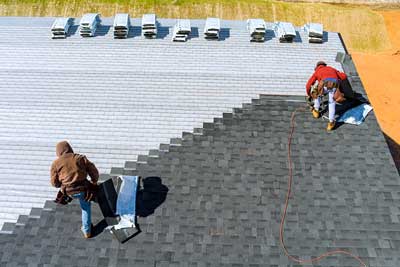
Unlike a kitchen reno or adding a patio, roofing work won’t leave you with a new space to enjoy. But keeping your shingles in good shape (or getting a new roof, as needed) protects you from leaks and more costly damage. Still, roofing work is astonishingly expensive—even owners of small homes likely will pay more than $8,000 to replace their shingles. And unless you choose your contractor carefully, you can overspend by thousands of dollars for lousy work.
Use our ratings of area roofing contractors to find high-quality companies.
If you need a new roof, get multiple bids from top-rated contractors. Doing so will probably save thousands of dollars. When our undercover shoppers collected prices for reroofing jobs for three homes, they were quoted bids ranging from $14,935 to $49,735 for one job, $8,200 to $25,493 for another, and $9,900 to $21,750 for a third. Don’t assume a low price signifies lousy work: For each of these three jobs, our shoppers received low bids from top-rated outfits.
When collecting estimates, press roofers to provide info and advice on shingle options. Get a copy of the warranty from the manufacturer of whatever materials are used. Also ask for a warranty on the roofer’s work itself—ideally for five years or more—that provides free repairs if your roof leaks.
Roofers often use the length of manufacturers’ warranties to describe various shingle options (for example, “a 50-year architectural shingle” or a “30-year three-tab” product). But “lifetime” or lengthy warranty periods don’t cover all leaks and other common problems.
Manufacturers’ warranties generally cover only defective shingles—an unlikely risk—not a subpar installation job. It’s reasonable to assume that heavier shingles will be more durable, but they’re also far more expensive.
Before using any contractor, ask for proof that it is licensed and carries liability and workers’ compensation insurance.
Get a fixed-price contract that specifies exactly which areas of the roof are to be covered and other details, such as whether old shingles are to be removed, whether flashings are to be replaced, who is responsible for cleaning up and hauling away debris, and exactly what types and weights of materials are to be used.
Arrange to pay for the work as late in the process as possible. Many contractors allow customers to withhold all payments until the job is complete. Try to withhold at least a portion of the price until your roof has been tested by bad weather.
If your roof has been damaged during a storm, beware of contractors who appear out of nowhere offering help—sometimes even months afterward. Many roofers chase storms in search of easy money. Some of these companies perform good work, but many do not, and some are con artists or engaging in insurance-related scams.