

Last updated July 10, 2026
Consumers’ Checkbook interviews thrifty gardening expert and author Mark Lane, who offers advice on how to grow plants and buy supplies for less.
 Filling your backyard or front-porch container garden with flowers, veggies, and other growing things can feed both your body and soul. But green thumbing it will also cost you: The 2026 National Gardening Survey found that, on average, American gardeners spend $740 a person each year, a jump of more than 18 percent compared to 2025.
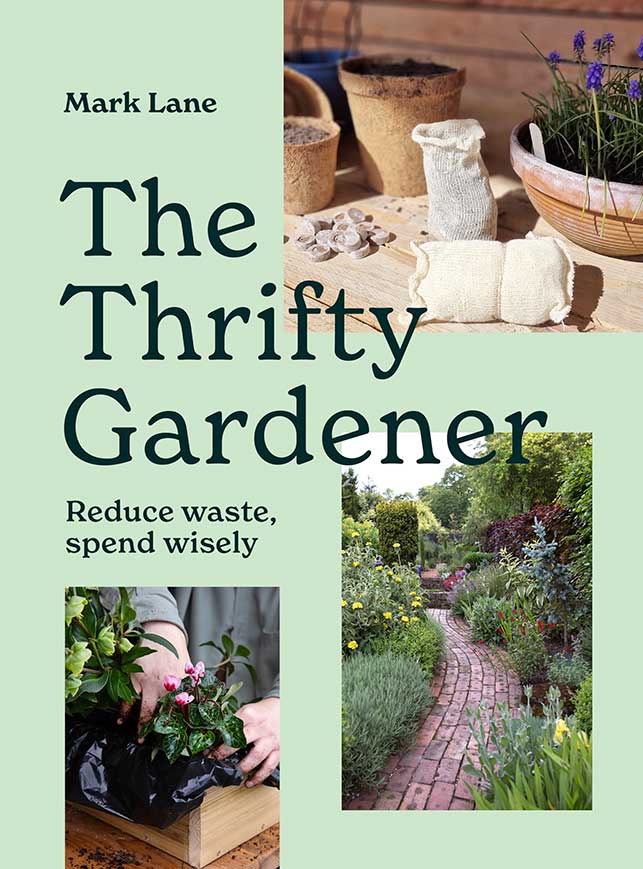
Mark Lane, a British gardening expert and BBC commentor, is passionate about making cultivation and landscaping more approachable and affordable. His new book, The Thrifty Gardener, plots out ways to save money and resources in your yard or on your balcony. Consumers’ Checkbook spoke with him to dig into his ideas.
Checkbook: What does it mean to be a thrifty gardener?
Mark Lane: People assume it means being cheap, but to me it is really about being selective. It’s about understanding where spending money creates long-term value and where spending money simply buys convenience or instant gratification.
A thrifty garden isn’t necessarily a low-cost garden. In fact, some of the most economical gardens over 20 years require significant investment at the start. I’d suggest dividing things into three categories: things worth investing in; things worth saving on; and things worth making yourself.
 CB: Where would you spend on gardening?
ML: Soil improvement: If a garden has poor soil, compacted ground, or lacks organic matter, spend money on compost, well-rotted manure, leaf mould, soil conditioners, and mulches. Healthy soil affects everything that follows: plant health, drought tolerance, pest resistance, and growth rates.
Trees: Whether it’s a crab apple, maple, birch or ornamental cherry, a tree provides structure, shade, wildlife habitat and seasonal interest for decades. The cost spread over 20 or 30 years becomes negligible.
Hard landscaping: Paths, retaining walls, steps, drainage, and foundations are expensive to alter later. If a patio settles badly after three winters, you’ll wish you’d invested in proper construction from the start.
Quality tools: A good spade, secateurs [pruning shears], and pruning saw can last many years. I’ve seen gardeners repeatedly buy inexpensive tools that break after a season or two.
Irrigation and water harvesting: With increasingly unpredictable weather, investing in water butts, storage tanks or efficient irrigation can save considerable money and effort over time.
CB: Which areas of the garden can I save on?
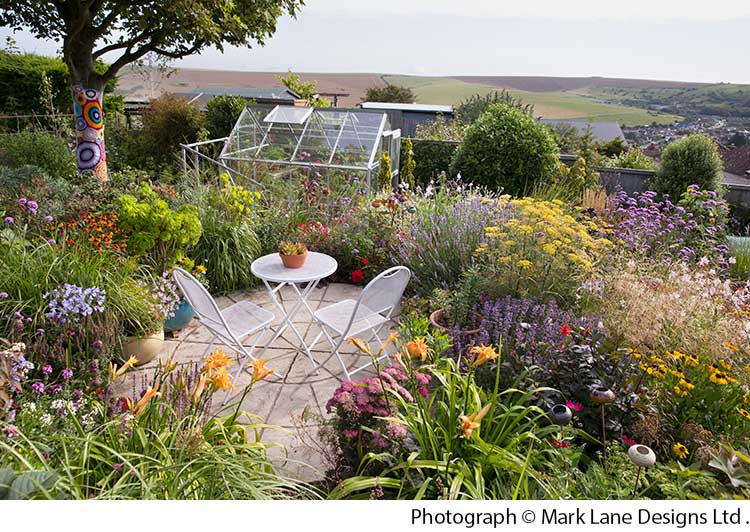
ML: You could save on annual bedding plants. Grow perennials, self-seeding annuals, and flowering shrubs that return reliably instead.
Also, pots can be astonishingly expensive. Some beautiful, glazed pots cost more than the plants they contain. I would happily use reclaimed containers, galvanised tubs, vintage finds or simple terracotta rather than chasing designer brands.
CB: You’re a big proponent of making things for your garden. What are some of your tricks?
ML: This is where gardening becomes wonderfully thrifty! I make compost with kitchen peelings, lawn clippings, autumn leaves and prunings. It becomes a soil conditioner that would otherwise cost money to purchase.
I also propagate plants. Many perennials can be divided every few years. Softwood cuttings, hardwood cuttings, and seed sowing can dramatically expand a planting scheme at minimal cost. A single clump of hardy geranium, for example, might be divided repeatedly throughout its life.
You can also use pruned branches and coppiced material to make attractive supports for peas, sweet peas, and herbaceous perennials.
CB: I know starting plants from seeds saves money, but isn’t it difficult?
ML: Seed sowing has a reputation for being more complicated than it really is. A lot of that comes from the way it’s often presented: rows of trays, heated propagators, misting systems, labels everywhere, and a sense that, if you miss a step, the whole thing collapses. In reality, it can be one of the most economical and flexible ways of gardening.
Feel daunted? Avoid thinking of seed sowing as a single grand project and break it into small, low-risk experiments.
A very gentle starting point is direct sowing of reliable species straight into the ground. Hardy annuals like calendula, nigella, cornflower or eschscholzia [poppies] are almost designed for beginners. You prepare a small patch of soil, scatter seed, lightly cover it, and let nature do most of the work. No indoor setup, no transplanting, minimal cost, and usually quick results.
Another easy entry point is containers. A simple pot on a windowsill or patio can become a micro nursery. Herbs such as basil, parsley or coriander are ideal because they grow quickly, are regularly harvested, and don’t demand precise conditions. Even if a sowing fails, the financial loss is negligible, and the learning is immediate.
CB: I think many baby gardeners don’t understand the difference between perennial and annual plants. How does knowing that help save money?
ML: That distinction is a quiet fundamental that shapes the entire economics of a garden. Once it’s properly understood, it changes how people buy, plant, and even think about time in the garden.
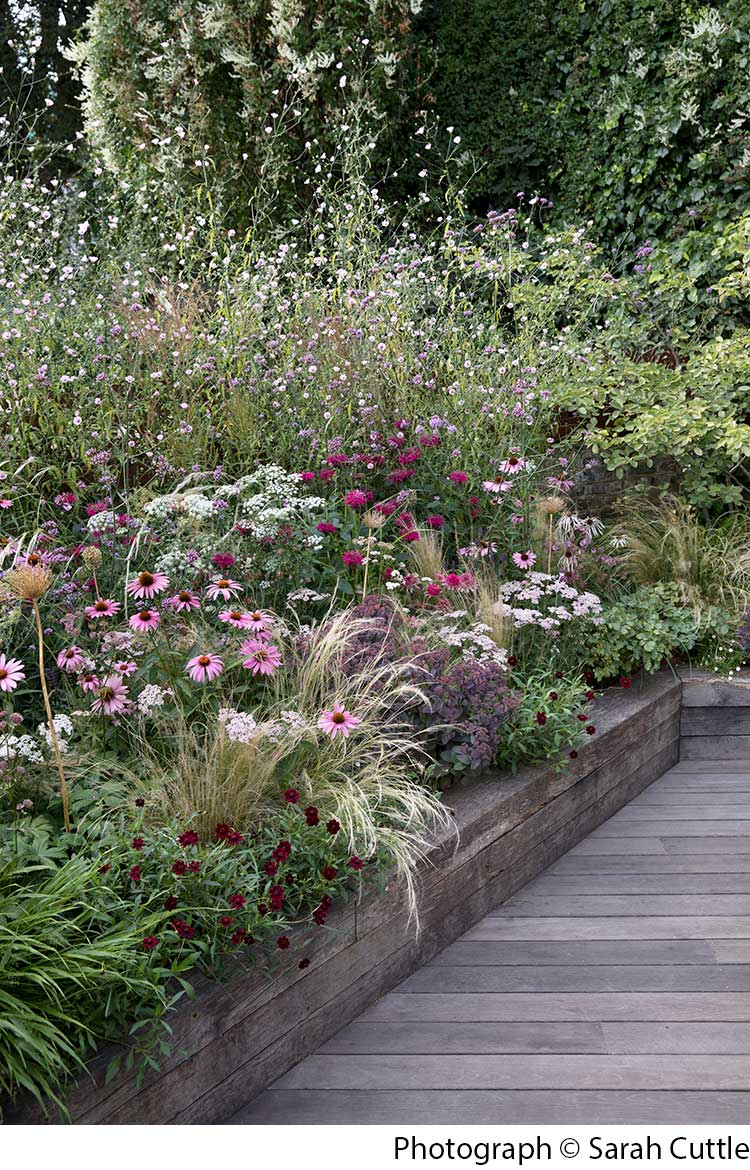
At its simplest, an annual completes its life cycle in a single growing season. You sow or plant it, it flowers, sets seed, and then dies. A perennial, by contrast, returns year after year, often building in size and impact as it matures. That one difference has a surprisingly large effect on long-term spending.
CB: Your book also talks about propagating plants from cuttings. I remember my grandma doing this. Why did it fall out of favor?
ML: Propagation is one of those skills that quietly slipped out of everyday gardening culture. Garden centers have made it incredibly easy to buy ready-grown plants in almost every season. When a plant is $6 to $12 and instantly attractive, it feels simpler to replace than to multiply.
Plus there’s been a loss of intergenerational teaching. Earlier gardening knowledge was often passed through families or local communities—people simply showed each other how to take a cutting from a geranium or divide a clump of iris. As that informal sharing declined, so did confidence.
And finally, there’s a subtle commercial element. A gardener who propagates well is, frankly, a less frequent customer.
 CB: So how do I propagate new plants from old ones?
ML: From thrifty perspective, propagation is almost unbeatable. It turns one plant into many, reduces risk, and allows you to adapt plants to your own conditions over time. It also creates resilience in a garden—if something thrives, you can expand it cheaply; if something struggles, you haven’t lost much. It also changes your relationship with plants. Instead of being fixed purchases, they become living resources.
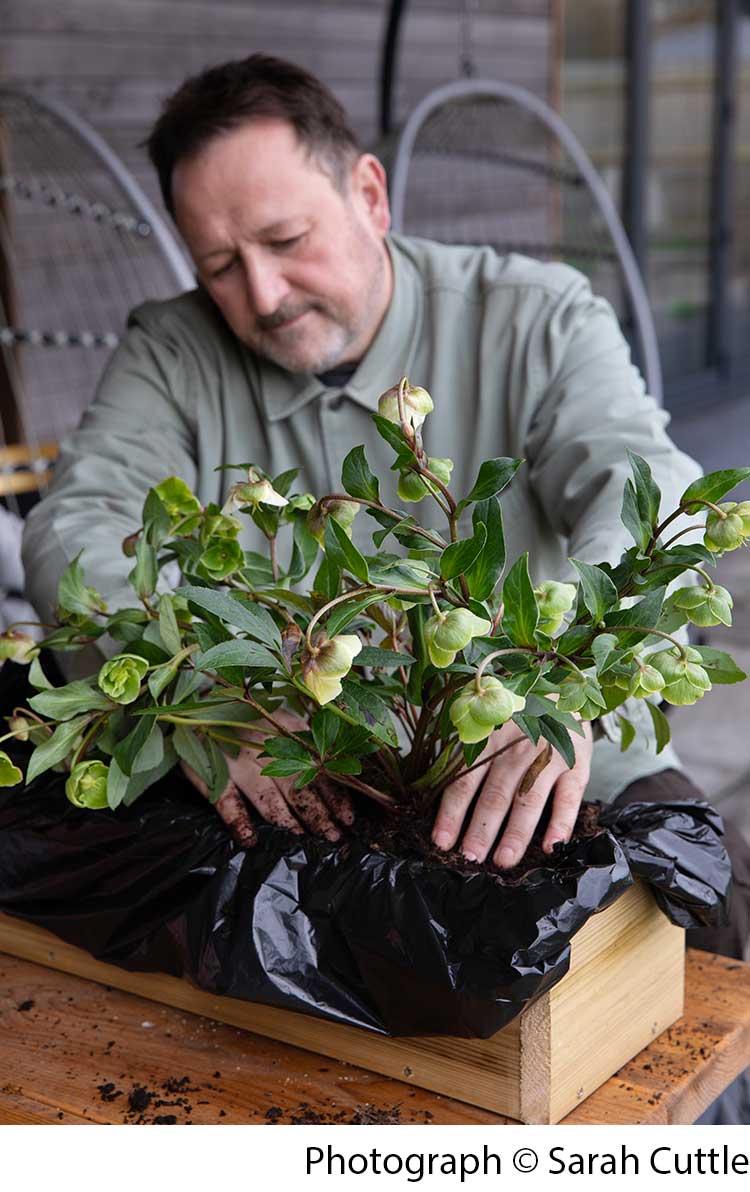
The easiest way to start is with softwood cuttings like pelargoniums (geraniums in everyday language), fuchsias; rosemary (with a bit more patience); lavender (slightly trickier but rewarding); or hydrangeas.
The simple method:
- Take a non-flowering shoot about 8 to 10 centimeters long.
- Cut just below a leaf node with clean scissors or secateurs.
- Remove the lower leaves, leaving a small tuft at the top.
- Insert into a pot of free-draining compost (multi-purpose mixed with a little grit or perlite if available).
- Water lightly and place somewhere bright but not in harsh sun.
Arguably even simpler than cuttings is division, especially for perennials. Plants like hostas, daylilies, Astrantia, and hardy geraniums. These can often be lifted and split with a spade or two forks. Each section becomes a new plant. The advantage here is immediacy: you’re not waiting for rooting, you’re simply redistributing established growth.
CB: What’s the biggest thing you hope people take away from the book?
ML: The most economical thing in gardening is patience. Many gardening expenses arise because we want a finished garden immediately. We buy large plants instead of young ones. We replace plants before understanding why they failed. We redesign areas before they've had time to mature.
A thrifty gardener tends to think in years rather than weeks. If I had $1,300 to spend on a garden, I would probably allocate a large proportion to soil preparation, a few excellent structural plants, perhaps one or two trees, and good infrastructure. Then I’d fill the gaps through propagation, division, seed sowing, and time.
That’s where the real thrift lies: spending generously on the bones of the garden and economically on everything that can grow, multiply or improve naturally over time.
