

How to Get the Best Deal on Appliances
Last updated June 2026

When buying appliances, you want sound buying advice, careful and prompt delivery, a trouble-free installation, and a low price. Fortunately, we find that highly rated stores often quote prices as low as, or even lower than, their poorly rated competitors.
Our undercover shoppers sought prices for 17 appliance models from the stores listed on our Ratings Tables. We used the prices we were quoted to calculate the price comparison scores. They show how each retailer’s prices compare to the average prices for all surveyed outlets and are adjusted so that the average price comparison score is $100. Prices for a retailer with a score of $105, then, were five percent higher than average; prices for a retailer with a score of $95 were five percent lower than average.
We included stores’ fees to deliver and install each appliance we shopped, to haul away an old appliance, and for any needed parts or installation kits. If a store told our shoppers it does not provide installation services for the type of appliance we shopped, we added our estimate of the average price charged by local plumbers to do the work.
The table above lists the lowest and highest prices quoted by local stores (including national chains) for each appliance model (again, including costs for delivery, haul-away, and installation).
Here’s what we found:
Don’t assume sale prices are low prices.
Don’t assume that any sale price—even one that seems heavily discounted—is a real deal. The “sales” offered by many retailers probably aren’t special at all. At most stores the “sales” for appliances never end. We tracked prices at 25 major retailers for six months and found that many stores use deceptive practices, especially for appliances. Even if the sign says “Save 60%,” it’s probably meaningless and not even a good deal.
Shopping around usually nets big savings.
Overall, store-to-store price differences are smaller for new appliances than for other types of local service providers we cover. But we found you can still save hundreds of dollars by obtaining price quotes from several stores—and it’s easy to get them via phone, email, or online.
Superior service doesn’t always cost more.
Shop at stores that receive high scores from area consumers. For each appliance model we priced, we received at least one low price quote from a top-rated store.
Don’t assume online-only retailers are cheaper than local stores.
Although we often found low prices online, our shoppers usually found better deals at local retailers.
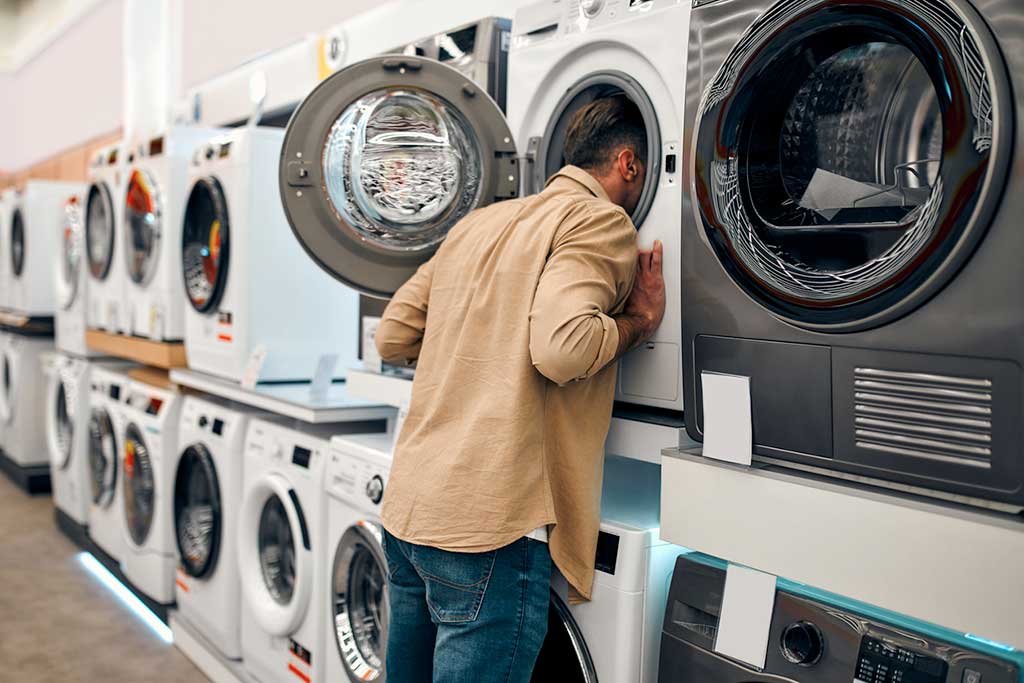
Big chains don’t always have the lowest prices.
ostco’s price comparison score is the lowest ($82, or prices 18 percent lower than average). Keep in mind that selection at Costco is somewhat limited. Prices at I.Z. Schwartz Appliance ($89), Home Depot ($90), and Hugo’s of Melrose ($92) were also among the lowest. But prices at national chains Best Buy and Lowe’s were only about the same as the averages for all other stores.
Call or email stores to get price quotes.
Appliance manufacturers use a bad-for-consumers policy called “minimum advertised price,” or MAP. It requires retailers to advertise product prices at or above preset minimums. For instance, appliances from GE, LG, Whirlpool, and other makers can’t be advertised at a price lower than a minimum price set by the manufacturer.
These constraints, designed to squelch price competition and boost profits, mean the same prices are often advertised by most retailers. But MAP policies don’t stop retailers from selling products for lower prices. If you call or email stores for quotes, you’ll often be offered lower-than-advertised prices—especially from independent stores.
When getting price quotes, tell retailers you are shopping around.
Salespeople will offer their best prices upfront if they know you will buy elsewhere for a better deal. At independent stores, our shoppers found that telling sales staff that they were getting price quotes from multiple stores often spurred discounts, waivers of delivery and installation fees, or both. Spurring big chains to provide discounts took more effort, but when our shoppers waited on hold to speak with sales managers, they sometimes secured better deals.
Our advice? Solicit competitive bids from four or five retailers (start with those highly rated for quality). Ask to speak to someone who has authority to provide discounted pricing, and give them the makes and model numbers of the appliances you want. Be clear that you are calling multiple companies for bids and will buy from whoever offers the best deal.
Be polite, businesslike, and let stores know that you solicit competitive bids whenever you make major purchases. Most appliance salespeople will provide discounted pricing. If the store with the lowest price has low service ratings, call one with better ratings and ask it to match your price.
Don’t forget to add in fees for delivery, haul-away, and installation.
Some stores include fees for delivery, hauling away old appliances, and installation in appliance prices; others charge a flat fee for delivery and installation; and some charge separate fees for each service. Some retailers levy steep service fees. For example, some stores quoted our shoppers prices of $250 or more to install dishwashers and $200 or more to install gas ranges.
To avoid surprise add-on fees, ask for separate prices for each service you need—then you’ll know whether it could cost less to have an independent pro do the work instead. If you don’t need delivery or installation, say so and the store can adjust prices accordingly.
Determine what the store will and won’t do when installing appliances.
Some appliance stores have employees (or, more commonly, subcontractors) who can perform any type of appliance installation. But some companies won’t install dishwashers, and others won’t connect appliances to gas lines. Some delivery personnel won’t do anything except move appliances into place and plug them in.
If you buy from a store without full installation services and you aren’t comfortable doing it yourself, you must hire a plumber or appliance repair service. Reasonably priced plumbers charge less than $150 to hook up clothes washers, gas stoves, or dishwashers. When comparing appliance prices, take these expenses into account.
Many consumers prefer stores with complete installation services. If something goes wrong, this eliminates disputes between the store and you and/or the plumber or handyman you hired over who is at fault.
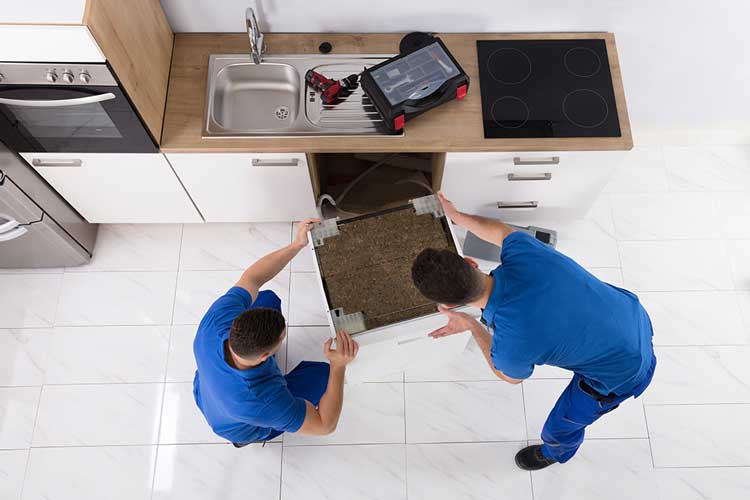
Will your installation be difficult or unusual? Hire a pro.
Some installations are complicated. To replace dishwashers, countertops may have to be removed. If you’re replacing an electric appliance with a gas model, or vice versa, gas lines must be run or removed. Replacing very old appliances may require new pipes and connections. Most plumbers can handle these jobs. Adding an electric clothes dryer to a new space or to an old room that isn’t wired adequately? An electrician can install a new circuit and connect it.
Ask about installation kits.
Many appliances require extra parts to install. Ask stores about prices for these “installation kits.” Our shoppers found that the websites of major chains automatically added them to our appliance orders.
If a contractor is handling your appliance purchases, make sure you are getting a good deal.
When pricing remodeling jobs, general contractors usually work out an appliance budget or allowance with customers, and use it to select models to purchase and install. We have no problem with an arrangement like this, but check prices to make sure you can’t do significantly better. Find big savings? Ask the contractor to buy from the low-priced retailer—and adjust your contract price accordingly. Remodelers frequently mark up the prices they pay their retail and wholesale sources.
Skip the extended warranty.
Extended warranties, protection plans, and extended service agreements are essentially appliance insurance policies. Unlike auto, homeowners, health, or life insurance, they insure against relatively small losses—potential repair or replacement costs—and pay out in claims only a small portion of what they take in. Most new appliances are very reliable, and those that do break down are likely to do so right away, while still under the manufacturer’s warranty.
Extended warranties are a good deal for stores selling them, and the companies that administer them and pay the claims—but a bad deal for consumers. On average, more than half the price of extended warranties goes to the retailers, and much of the rest stays with the company backing and administering them. Less than 20 cents of every dollar taken in gets paid out in claims. Retailers make very little profit from appliance sales, so it’s not surprising that buyers get pressured to purchase extended warranties.
Still considering an extended warranty? Shop around. You don’t have to shell out for one at the time you purchase the appliance, nor do you have to get it from the store that sells you the appliance.