

Preventing an Appliance Apocalypse
Last updated June 2026
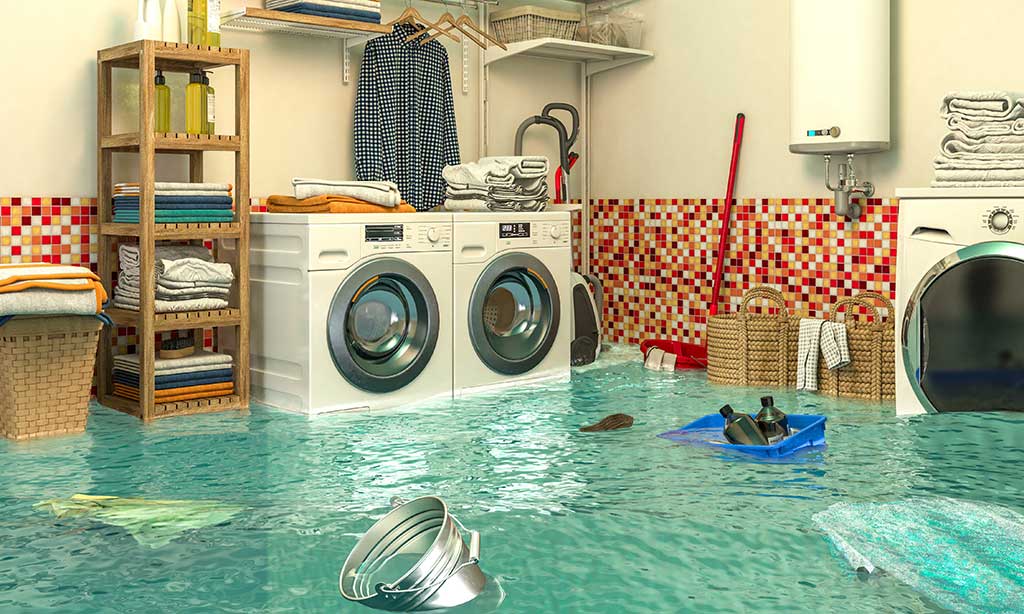
Occasionally, a broken appliance can cause serious damage, especially of the watery sort. Your clothes washer’s supply hoses may burst or crack and produce a continuous spray of water. That’s bad if your washer is located in an unfinished first-floor space, but a catastrophe if it’s upstairs. Insurance companies, which may have to pay homeowners’ claims after such mishaps, recommend changing washer supply hoses every three to five years. Other experts recommend replacing hoses after five years, or seven at most. Use heavy-duty, steel-reinforced hoses, which cost around $20 a pair.
Although a clothes washer’s discharge hose can also break, this is less of a risk because it’s not under constant pressure. If it does break, the flood will generally be limited to one load of dirty, soapy water. However, if the hose breaks near the discharge outlet while the washer is in use, the washer will keep trying to fill and discharge until you turn it off. So, some homeowners replace the discharge hose and supply hoses at the same time.
Another flood risk: The water shut-off valve on either your clothes washer or dishwasher fails, and the appliance keeps filling until water spills out. Though this is uncommon, you can cut the risk (and the chance of supply-line breaks) by installing an electronically activated shut-off valve connected to an electronic moisture detector on each of your supply lines.
An electronic moisture detector will protect you from the slowest of leaks, too—for instance, a pinhole leak or faulty seal that leaks a little water in a hard-to-see spot below your clothes washer or dishwasher. That kind of slow leak won’t, of course, do sudden damage, but in time may cause your flooring to rot out or damage the ceiling below. To avoid slow leaks, a simpler precaution is to inspect underneath the appliance periodically right after running it. To do this for a dishwasher, you’ll have to remove the trim strip/access panel below the door.
To avoid slow leaks from your clothes washer, place a plastic pan or tray under the entire washer. Just don’t count on this to collect all the water from a burst pipe or failed shut-off valve. Even if the pan is hooked up to a drain system, it won’t be able to handle the flood.
Appliances on the fritz can also cause fires, like the thousands which start each year when clothes dryer exhausts become clogged with lint.
Protect yourself by noting if your dryer seems to be getting less efficient. If it isn’t drying clothes quickly, clean out the entire exhaust duct from the dryer to the outdoors.
Defects also pose fire and safety risks. For example, in 2024 Samsung recalled more than 1.1 million electric ranges due to fire risk from poorly designed knobs; separately, LG recalled about 500,000 ranges for the same reason. In 2024, about 380,000 Frigidaire side-by-side refrigerators were recalled due to a faulty icemaker part that could break apart into small pieces and get dispensed along with ice, creating a choking hazard. And in 2025, nearly 1 million Frigidaire minifridges were recalled due to fire and burn hazards.
These are in addition to the millions of dishwashers that have been recalled in the last 15 years for fire-safety reasons.
Periodically check the U.S. Consumer Product Safety Commission website to see if your appliances are on a recall list and, if so, arrange for a free repair or replacement.
As a general precaution against disasters, run your clothes washer and dishwasher only when you are home. Going on vacation? Shut off clothes washer supply valves.
