

How to Tell It’s Time for a New Roof
Last updated November 2026
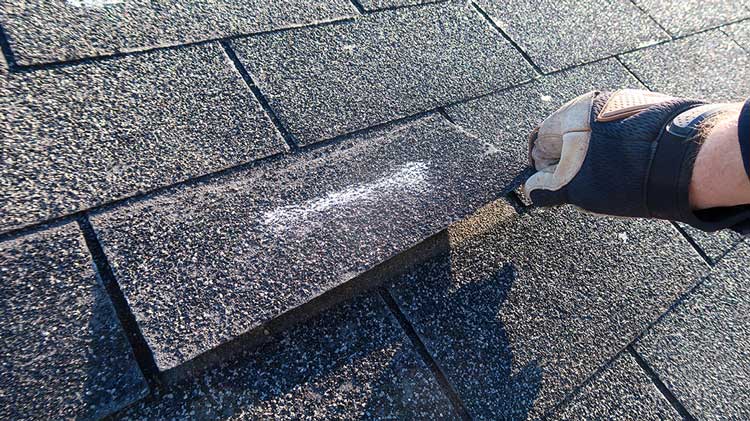
Inspect your roof annually and after major storms, even if you don’t notice leaks.
If you have an unfinished attic, look inside it for evidence that water has come into contact with the rafters or sheathing. Poke at dark spots to determine if they are rotten. Examine areas where vent pipes, chimneys, skylights, or other elements pass through the roof. If you spot a hole in the roof, jam a length of wire up through it so you can find the hole from the outside.
If you have a finished attic, look for signs of water damage on the ceiling and walls. But know that the damage may be far from the leak that caused it. Water often passes through a leaky spot and runs along rafters, dripping off only when it hits an irregularity or obstruction. Only an outdoor inspection will reveal problems you can’t locate from inside.
Begin an outdoor inspection by checking gutters and around the foundation for fallen shingles. Then look over the roof for missing or damaged shingles (you may be able to do this from the ground with binoculars). If you see water damage on an inside ceiling or wall, try to locate the point on the outside immediately above this damage, and then carefully work back and forth up the roof looking for the culprit leak. Check that flashings around chimneys, vents, and other protrusions have not developed holes or pulled loose.
Your inspections will reveal whether the entire roof is due for replacement. Different types of roofs have different lifespans:
Shingles made of asphalt or composite materials need to be replaced when surfaces have eroded away; first the granules on the surface disappear and then the shingles themselves wear down. The first places to wear out are the surfaces below the decorative cutouts or at the ends of shingles. When holes have eroded through the shingles, abundant leaks are imminent. Although asphalt shingle roofs typically last between 20 and 30 years, and composite shingles 40 years or longer, roofing lifetimes vary depending on how hot the roof gets, the quality of the original roofing materials, and other factors. Even before holes appear, your roof is a goner if shingles appear gray and bloated, or if a piece of shingle crumbles easily between your fingers.
Wood shake or shingle roofs may go bad from drying out and splitting or warping. As shingles curl, they pull out nails and blow away. When you begin to lose shingles, it may be time for a new roof. Wood shake or shingle roofs occasionally last as long as 50 years, but can fail much faster if located in a shady area where dampness, rather than dryness, is the problem. Under these circumstances, you may need to have a roofer treat your roof with a preservative spray every three to five years. It is not uncommon for roofs that cannot dry between rains to become mossy and rotted within 10 years.
Tile or slate roofs can last indefinitely (though individual pieces may have to be replaced).
Metal roofs need to be replaced when they become riddled with holes too difficult to patch; if maintained properly, they, like high-quality slate and tile roofs, should last indefinitely.
Built-up roofs (composed of layers of hot bitumen and roofing felt, usually topped with stone) need to be replaced when they become so dried up and cracked that multiple leaks develop. Other telltale signs are blisters and places where the layers have delaminated. A four-ply built-up roof should last 20 years or more.
Single-ply and modified bitumen roofs usually fail first at seams and around drains. Look for separation at seams and bubbling or cratering of the membrane. Single-ply and modified bitumen roofs should last 20 years or more.
{{newletter}}