

Trends in Cabinets & Countertops
Last updated November 2026
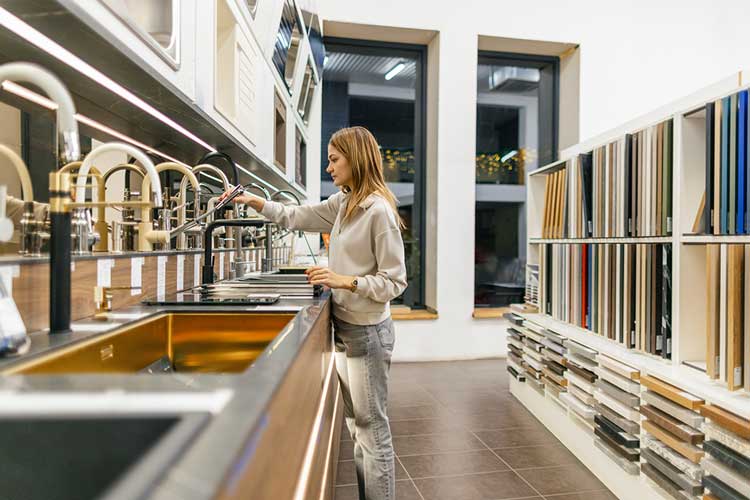
You’ll probably redo your kitchen only every 10 to 20 years, so select cabinets and countertops that you love—with an eye toward finishes that stand the test of time. Here’s how to get a space you’ll enjoy for years.
Cabinets
Colors: Natural wood and colored cabinets are overtaking the all-white kitchen boom of the early 21st century.
Open shelving: Forgoing cabinet doors, particularly for shelves above counters, can help your kitchen feel roomier without sacrificing storage.
Materials: Natural wood tones are also making a comeback. Think contemporary veneers in walnut or maple shades, rustic, sometimes-reclaimed materials, and antique furniture-inspired island bases.
Features: Even inexpensive cabinets (Hej, Ikea!) can now be customized with endless built-in or semi-built-in storage: slide-out trash cans, pot-lid organizers, spice drawers with indents for bottles. Are they worth the (usually) extra cost? It depends, but if you opt out during installation, it might be pricier (or impossible) to add them later. Semihandmade (semihandmade.com) even manufactures fancier hardwood doors and drawer fronts for Ikea cabinets.
Styles: You can get doors and drawers with raised panel details (clean-lined Shaker is still popular) or more contemporary flat-panel styles. English farmhouse kitchens starring muted colors (mossy green, deep maroon) and beadboard details are also on the rise.
Function: Many cabinets now come with soft-close drawer slides: When you push the drawer in, it won’t slam and instead gently retracts on its own. It’s not always a standard option, so you must request it. Other innovations in cabinetry: fold-up cabinet doors, small appliance “garages,” and covering large appliances like dishwashers in the same material as cabinet doors.
Hardware: Many contemporary cabinet styles don’t even need hardware; they’re made with graspable lips or edges that you open sans pulls or knobs. Hardware itself is getting simpler and sleeker: flat round knobs, concealed hinges.
Countertops
Materials: Granite, marble, and quartzite (a swirled gray-and-white natural stone) remain popular kitchen counter choices, though marble can stain and chip. Manufactured quartz—formed from stone chips, resins, and pigments—is even more popular than granite, but recently was linked to thousands of cases of silicosis, a deadly lung disease, among workers who cut quartz for countertops. California is moving to ban it, and several other states are considering doing the same.
An alternative to quartz is sintered stone, which is made by compacting natural minerals with zero to very low silica content under extreme heat and pressure. The biggest brands are Dekton and Lapitec, and it’s a durable, heat-proof, and UV-stable option. Other of-the-moment counter choices: concrete, bamboo, and stainless steel. The last stands up to Top Chef-style cooking and looks sleek.
Finishes: Most materials are available in a range of finishes; the two most popular are polished (glossy) and honed (matte). Ask to see samples of “leathered” or “pebbled” styles, which appear earthier and more textured.
Edges: You can get beveled, rounded, and eased or straight profiles. Eased and beveled look more modern; rounded edges are more traditional and less prone to chipping.
Colors: Natural stone or man-made materials mimicking its look are both popular. Creams and whites remain hip, though black (particularly in popular-but-finicky soapstone) is also trendy. With man-made countertops, you have more color choices—deep blue is surprisingly attractive.
