

Buying Kitchen Cabinets
Last updated November 2026
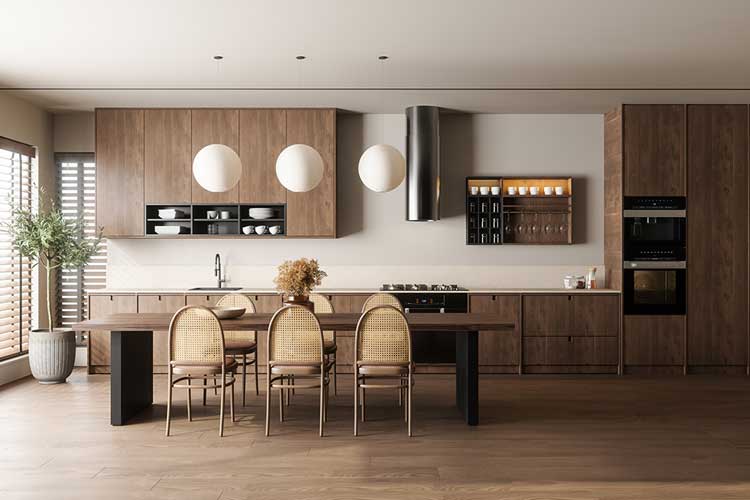
Cabinets and countertops are central to kitchen makeovers—and usually account for the biggest chunk of budgets. Depending on the size of the job and what you DIY, for a light remodel you’ll probably spend between $500 and $2,000 to paint existing cabinets or $5,000 to $12,000 to re-face them. A gut job will cost $5,000 to more than $20,000 for the cabinets alone and $2,000 to more than $5,000 for new countertops.
If you redo your cucina, you must make dozens of decisions: layout, materials, durability, brands, styles, finishes and colors, hardware, appliances, and more. You’ll also need to select cabinet and countertop styles and colors that won’t quickly go out of fashion. If you want to change your kitchen’s layout, you’ll have more choices—and will likely need design help.
We’ll help you get started with ideas on how to lay out your foodie zone, find cabinet and countertop suppliers that offer great service and low prices, and get the best deals on products and installation.

Design Decisions
Begin by considering:
- What do you like (and hate) about your current kitchen?
- How do you plan to use the space—a center of family activities; a place to eat most or all meals; for gourmet-level cooking, sometimes with more than one chef; for entertaining guests; a makeshift space for conducting family business?
- Do you want to make structural changes? Replace appliances?
- What’s your budget?
- Do you have a certain look or finishes in mind? Whether you buy materials yourself or through a designer or contractor, collect a portfolio of kitchens you like. Get ideas from Pinterest and home design magazines or websites.
There are compelling reasons to seek professional design help: Pros usually know how to make kitchens look better and function more efficiently, and they know how to keep down project costs. With their expertise, you can avoid mishaps—like discovering you can’t install a fixture because a pipe blocks the way. And if suppliers or installers get something wrong, a pro has more leverage to make it right.
A professional might be a kitchen designer or architect who (for a fee) only creates designs. More commonly, consumers get design services from businesses selling cabinets and other kitchen supplies. Some of these companies charge hundreds, or even thousands, of dollars for design work. Others waive the fee if you end up buying your cabinets or other items from them. And some companies provide the design for free and hope that you purchase through them.
Interview several designers. Here at Checkbook.org you'll find customer reviews of contractors and remodelers (which include many kitchen specialists), cabinet retailers, and countertop suppliers.
When meeting with designers, assess their taste and communication skills. We prefer designers who will visit your home, not just recommend products based on room measurements. A meeting in your existing kitchen could cook up the most creative ideas and ensure accurate space planning.
Ask promising candidates for work portfolios and references. Also discuss timing; how many draft plans the designer will provide; whether you must use the designer’s own contractors; how closely the designer will supervise the installation; whether you will have to buy cabinets, countertops, fixtures, appliances, and other items through the designer; and how the designer will be compensated.
We recommend arrangements that let you compare prices and buy from a supplier other than the designer, if the price is right. It’s worth paying a design fee for this freedom, since there can be substantial markups on cabinets, countertops, and other items. You don’t want to be trapped with a designer who provides a free design and then pads your bill with excessive markups. Click here for tips on getting the best appliance deals.
Companies that don’t charge design fees and don’t require you to buy through them are particularly attractive options. This lets you shop around for competitive prices and not overpay for cabinets and other items. Of course, in the end you might be willing to shell out extra to buy through the company that did the design work, either because it seems fair or because you are pleased with the plan and want the designer involved throughout the project.
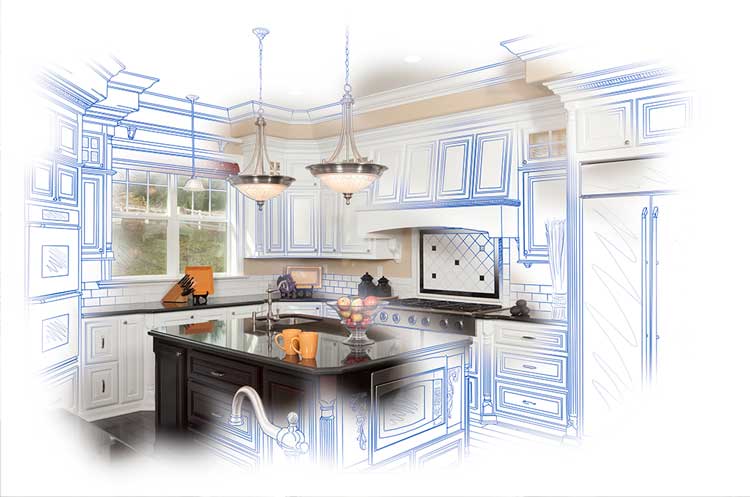
Comparing Cabinets (and Avoiding High Prices)
Zero in on the number, types, and sizes of cabinets you need, plus your preferred type of wood, door style, finish, and knobs. Consider special features such as spice drawers or cutting board cubbies. The websites of major manufacturers such as Fieldstone Cabinetry, KraftMaid, Wood-Mode, and Zonavita display types, styles, and finishes; provide assistance with creating plans; and answer many of your questions.
Big-box retailers Home Depot and Lowe’s sell stock cabinets made by these manufacturers and others. Some independent kitchen design outfits also buy and install premade models. These products are mass-produced in standard sizes, and cost less than custom or semi-custom cabinets.
But increasingly, kitchen remodeling contractors are installing semi-custom units, or are building custom cabinets in their workshops or hiring carpenters to make them on spec. The big advantage of custom cabinets is that they are made to fit your exact size needs and usually constructed using higher quality and more durable materials. Semi-custom units are also made to order, but in standard sizes that may require spacers to make everything fit.
According to sales reps, stock cabinet prices have soared so high that customers are better off paying a bit more and getting higher quality materials and tailored-to-them designs.
When comparing cabinet models or plotting out custom units, look for signs of quality:
- Wood grain that matches from piece to piece
- Drawers with dovetailed joints constructed of 1/2-inch or 3/4-inch plywood. They should pull out completely and have bottoms fitted and glued into side grooves.
- Doors with fitted mortised corners, which are sturdier than those with non-interlocking butt joints.
- Top-quality cabinets usually have solid-wood face frames at least ¾-inches thick. For the cabinet box, avoid thin sides, backs, and floors; especially avoid particleboard.
Then ask how long it will take for suppliers to deliver various options.
Once you have decided on a plan and on type and style of cabinets, make a detailed list of each part of your order, specifying style, wood type, finish, size, and features. Then contact several suppliers and get price quotes, making sure the bids match your specs.
The downside is that it’s now more difficult to compare prices by collecting bids for the exact same cabinet models from several suppliers. Our undercover shoppers asked local outfits for their prices to supply and install 13 KraftMaid cabinets (plus filler overlays, toe kicks, and molding) for an average-size kitchen remodel. Unfortunately, they were unable to get contractors to quote because nearly all now supply only custom or semi-custom cabinets.
Comparing prices even for stock cabinets is challenging because some stores, including Home Depot and Lowe’s, offer cabinets identified by style names not available elsewhere. For example, we sought pricing from area cabinet suppliers for KraftMaid’s “Lyndale” line, but Home Depot doesn’t sell it; instead, it offers a KraftMaid style it calls “Thornton.” Similarly, Lowe’s sells a KraftMaid line it calls “Deveron.” Sometimes we can use product specs to match up brands and models across different retailers. But most homeowners won’t do all this sleuthing.
If the price of new cabinets busts your budget, consider painting or re-facing existing ones. This is a good option if your cabinets are well-constructed and in good condition beneath the surface, and you are satisfied with the existing kitchen layout and design.
The best thing about painting is the price. The materials to paint cabinets should run about $200, and it’s a reasonable DIY project, while replacing cabinets in an average-size kitchen costs $8,000 or more. Even hiring a painter to do the work can keep costs to $500 to $2,000.
Although re-facing is much more expensive than painting, it should still cost less than half as much as replacements. A professional re-facer usually replaces cabinet doors and drawer fronts, and covers exposed face frames of the cabinets with a wood or plastic veneer that matches the new doors.